Edith Wharton
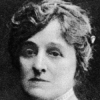
Edith Wharton
Edith Whartonwas a Pulitzer Prize-winning American novelist, short story writer, and designer. She was nominated for the Nobel Prize in Literature in 1927, 1928 and 1930. Wharton combined her insider's view of America's privileged classes with a brilliant, natural wit to write humorous, incisive novels and short stories of social and psychological insight. She was well acquainted with many of her era's other literary and public figures, including Theodore Roosevelt...
NationalityAmerican
ProfessionNovelist
Date of Birth24 January 1862
CityNew York City, NY
CountryUnited States of America
One of the first obligations of art is to make all useful things beautiful.
Life is made up of compromises.
Leisure, itself the creation of wealth, is incessantly engaged in transmuting wealth into beauty by secreting the surplus energy which flowers in great architecture, great painting and great literature. Only in the atmosphere thus engendered floats that impalpable dust of ideas which is the real culture. A colony of ants or bees will never create a Parthenon.
in the dissolution of sentimental partnerships it is seldom that both associates are able to withdraw their funds at the same time ...
Only the fact that we are unaware how well our nearest know us enables us to live with them.
Happiness is a work of art. Handle with care.
I feel as if I could trust my happiness to carry me; as if it had grown out of me like wings.
An education is like a crumbling building that needs constant upkeep with repairs and additions.
there are lots of ways of answering a letter - and writing doesn't happen to be mine.
To be able to look life in the face: that's worth living in a garret for, isn't it?
Apart from the pleasure of looking at her and listening to her-of enjoying in her what others less discriminatingly but as liberally appreciated-he had the sense, between himself and her, of a kind of free-masonry of precocious tolerance and irony. They had both, in early youth, taken the measure of the world they happened to live in: they knew just what it was worth to them and for what reasons, and the community of these reasons lent to their intimacy its last exquisite touch.
Think what stupid things the people must have done with their money who say they're 'happier without'.
I don't believe in God, but I do believe in His saints.
Society soon grows used to any state of things which is imposed upon it without explanation.