Ernst Haeckel
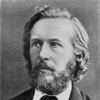
Ernst Haeckel
Ernst Heinrich Philipp August Haeckelwas a German biologist, naturalist, philosopher, physician, professor, and artist who discovered, described and named thousands of new species, mapped a genealogical tree relating all life forms, and coined many terms in biology, including anthropogeny, ecology, phylum, phylogeny, stem cell, and Protista. Haeckel promoted and popularised Charles Darwin's work in Germany and developed the influential but no longer widely held recapitulation theoryclaiming that an individual organism's biological development, or ontogeny, parallels and summarises its species' evolutionary...
NationalityGerman
ProfessionScientist
Date of Birth16 February 1834
CityPotsdam, Germany
CountryGermany
Man is not above nature, but in nature.
Ontogeny re-capitulates phylogeny.
The nucleus has to take care of the inheritance of the heritable characters, while the surrounding cytoplasm is concerned with accommodation or adaptation to the environment.
The real cause of personal existence is not the favor of the Almighty, but the sexual love of one's earthly parents.
The whole of organic nature on our planet exists only by a relentless war of all against all. ... The raging war of interests in human society is only a feeble picture of an unceasing and terrible war of existence which reigns throughout the whole of the living world.
We are compelled by reflection to recognize that God is not to be placed against the material world [as in Christianity], but must be placed as a 'divine power' or 'moving spirit' within the cosmos itself ... All the wonderful phenomena of nature around us, organic as well as inorganic, are only various products of one and the same original force.
As our mother earth is a mere speck in the sunbeam in the illimitable universe, so man himself is but a tiny grain of protoplasm in the perishable framework of organic nature. [This] clearly indicates the true place of man in nature, but it dissipates the prevalent illusion of man's supreme importance and the arrogance with which he sets himself apart from the illimitable universe and exalts himself to the position of its most valuable element.
The succession of individuals, connected by reproduction and belonging to a species, makes it possible for the specific form itself to last for ages. In the end, however, the species is temporary; it has no "eternal life." After existing for a certain period, it either dies or is converted by modification into other forms.
Man is not distinguished from [the animals] by a special kind of soul, or by any peculiar and exclusive psychic function, but only by a higher degree of psychic activity, a superior stage of development.
There is no doubt that the course and character of the feared 'European war'... will become the first world war in the full sense of the word.