Ernst Haeckel
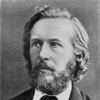
Ernst Haeckel
Ernst Heinrich Philipp August Haeckelwas a German biologist, naturalist, philosopher, physician, professor, and artist who discovered, described and named thousands of new species, mapped a genealogical tree relating all life forms, and coined many terms in biology, including anthropogeny, ecology, phylum, phylogeny, stem cell, and Protista. Haeckel promoted and popularised Charles Darwin's work in Germany and developed the influential but no longer widely held recapitulation theoryclaiming that an individual organism's biological development, or ontogeny, parallels and summarises its species' evolutionary...
NationalityGerman
ProfessionScientist
Date of Birth16 February 1834
CityPotsdam, Germany
CountryGermany
It is, however, a most astonishing but incontestable fact, that the history of the evolution of man as yet constitutes no part of general education. Indeed, our so-called "educated classes" are to this day in total ignorance of the most important circumstances and the most remarkable phenomena which Anthropogeny has brought to light.
An irrefutable proof that such single-celled primaeval animals really existed as the direct ancestors of Man, is furnished according to the fundamental law of biogeny by the fact that the human egg is nothing more than a simple cell.
Mental differences between the lowest men and the animals are less than those between the lowest and the highest man.
Man is not above nature, but in nature.
As our mother earth is a mere speck in the sunbeam in the illimitable universe, so man himself is but a tiny grain of protoplasm in the perishable framework of organic nature. [This] clearly indicates the true place of man in nature, but it dissipates the prevalent illusion of man's supreme importance and the arrogance with which he sets himself apart from the illimitable universe and exalts himself to the position of its most valuable element.
Man is not distinguished from [the animals] by a special kind of soul, or by any peculiar and exclusive psychic function, but only by a higher degree of psychic activity, a superior stage of development.
Phylogeny and ontogeny are, therefore, the two coordinated branches of morphology. Phylogeny is the developmental history [Entwickelungsgeschichte] of the abstract, genealogical individual; ontogeny, on the other hand, is the developmental history of the concrete, morphological individual.
Among the Spartans all newly born children were subject to a careful examination or selection. All those that were weak, sickly, or affected with any bodily infirmity, were killed. Only the perfectly healthy and strong children were allowed to live, and they alone afterwards propagated the race.
I established the opposite view, that this history of the embryo (ontogeny) must be completed by a second, equally valuable, and closely connected branch of thought - the history of race (phylogeny). Both of these branches of evolutionary science, are, in my opinion, in the closest causal connection; this arises from the reciprocal action of the laws of heredity and adaptation... 'ontogenesis is a brief and rapid recapitulation of phylogenesis, determined by the physiological functions of heredity (generation) and adaptation (maintenance).
The cell never acts; it reacts.
Politics is applied biology.
By ecology we understand the total science of the connections of the organism to the surrounding external world.
Civilization and the life of nations are governed by the same laws as prevail throughout nature and organic life.
Nothing is constant but change! All existence is a perpetual flux of "being and becoming!" That is the broad lesson of the evolution of the world.