Flannery O'Connor
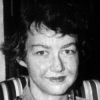
Flannery O'Connor
Mary Flannery O'Connorwas an American writer and essayist. An important voice in American literature, she wrote two novels and 32 short stories, as well as a number of reviews and commentaries. She was a Southern writer who often wrote in a Southern Gothic style and relied heavily on regional settings and grotesque characters. Her writing also reflected her own Roman Catholic faith and frequently examined questions of morality and ethics. Her posthumously-compiled Complete Stories won the 1972 U.S. National Book...
NationalityAmerican
ProfessionNovelist
Date of Birth25 March 1925
CitySavannah, GA
CountryUnited States of America
Anyone who survives a southern childhood has enough material to last a lifetime.
To the hard of hearing you shout, and for the almost blind you draw large and startling figures.
There is a certain embarrassment about being a storyteller in these times when stories are considered not quite as satisfying as statements and statements not quite as satisfying as statistics; but in the long run, a people is known, not by its statements or its statistics, but by the stories it tells.
The life you save may very well be your own.
I am very handy with my advice and then when anybody appears to be following it, I get frantic.
She could never be a saint, but she thought she could be a martyr if they killed her quick.
I am interested in making up a good case for distortion, as I am coming to believe it is the only way to make people see.
...you have to cherish the world at the same time that you struggle to endure it.
People without hope not only don’t write novels, but what is more to the point, they don’t read them. They don’t take long looks at anything, because they lack the courage. The way to despair is to refuse to have any kind of experience, and the novel, of course, is a way to have experience.
I'm a full-time believer in writing habits...You may be able to do without them if you have genius but most of us only have talent and this is simply something that has to be assisted all the time by physical and mental habits or it dries up and blows awayOf course you have to make your habits in this conform to what you can do. I write only about two hours every day because that's all the energy I have, but I don't let anything interfere with those two hours, at the same time and the same place.
There was a time when the average reader read a novel simply for the moral he could get out of it, and however na?ve that may have been, it was a good deal less na?ve than some of the limited objectives he has now. Today novels are considered to be entirely concerned with the social or economic or psychological forces that they will by necessity exhibit, or with those details of daily life that are for the good novelist only means to some deeper end.
One of the awful things about writing when you are a Christian is that for you the ultimate reality is the Incarnation, the present reality is the Incarnation, and nobody believes in the Incarnation; that is, nobody in your audience. My audience are the people who think God is dead. At least these are the people I am conscious of writing for.
There are two qualities that make fiction. One is the sense of mystery and the other is the sense of manners. You get the manners from the texture of existence that surrounds you. The great advantage of being a Southern writer is that we don't have to go anywhere to look for manners; bad or good, we've got them in abundance. We in the South live in a society that is rich in contradiction, rich in irony, rich in contrast, and particularly rich in its speech
The high-school English teacher will be fulfilling his responsibility if he furnishes the student a guided opportunity, through the best writing of the past, to come, in time, to an understanding of the best writing of the present. He will teach literature, not social studies or little lessons in democracy or the customs of many lands. And if the student finds that this is not to his taste? Well, that is regrettable. Most regrettable. His taste should not be consulted; it is being formed.