Franz Kafka
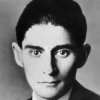
Franz Kafka
Franz Kafkawas a German-language writer of novels and short stories who is widely regarded as one of the major figures of 20th-century literature. His work, which fuses elements of realism and the fantastic, typically features isolated protagonists faced by bizarre or surrealistic predicaments and incomprehensible social-bureaucratic powers, and has been interpreted as exploring themes of alienation, existential anxiety, guilt, and absurdity. His best known works include "Die Verwandlung", Der Process, and Das Schloss. The term Kafkaesque has entered the English...
ProfessionNovelist
Date of Birth3 July 1883
CityPrague, Czech Republic
There are two main human sins from which all the others derive: impatience and indolence. It was because of impatience that they were expelled from Paradise; it is because of indolence that they do not return. Yet perhaps there is only one major sin: impatience. Because of impatience they were expelled, because of impatience they do not return.
Anyone who believes cannot experience miracles. By day one does not see any stars. Anyone who does miracles says: I cannot let goof the earth.
The founder brought the laws from the lawgiver; the faithful are meant to announce the laws to the lawgiver.
In a certain sense you deny the existence of this world. You explain life as a state of rest, a state of rest in motion.
One day, a leopard stalked into the synagogue, roaring and lashing its tail. Three weeks later, it had become part of the liturgy.
Nothing, you know, gives the body greater satisfaction than ordering people about, or at least believing in one's ability to do so.
In me, by myself, without human relationship, there are no visible lies. The limited circle is pure.
To write prescriptions is easy, but to come to an understanding with people is hard.
Evil is the starry sky of the Good.
Every dog has like me the impulse to question, and I have like every dog the impulse not to answer.
We were created in order to live in Paradise, and Paradise was ordained to serve us. What was ordained for us has been changed; it is not said that this has also happened with what was ordained for Paradise.
What's happened to me,' he thought. It was no dream.
No," said the priest, "you don't need to accept everything as true, you only have to accept it as necessary." "Depressing view," said K. "The lie made into the rule of the world.
My doubts stand in a circle around every word, I see them before I see the word, but what then! I do not see the word at all, I invent it.