Franz Kafka
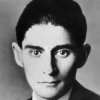
Franz Kafka
Franz Kafkawas a German-language writer of novels and short stories who is widely regarded as one of the major figures of 20th-century literature. His work, which fuses elements of realism and the fantastic, typically features isolated protagonists faced by bizarre or surrealistic predicaments and incomprehensible social-bureaucratic powers, and has been interpreted as exploring themes of alienation, existential anxiety, guilt, and absurdity. His best known works include "Die Verwandlung", Der Process, and Das Schloss. The term Kafkaesque has entered the English...
ProfessionNovelist
Date of Birth3 July 1883
CityPrague, Czech Republic
One of the first signs of the beginning of understanding is the wish to die. This life appears unbearable, another unattainable. One is no longer ashamed of wanting to die; one asks to be moved from the old cell, which one hates, to a new one, which one willl only in time come to hate. In this there is also a residue of belief that during the move the master will chance to come along the corridor, look at the prisoner and say: "This man is not to be locked up again, He is to come with me.
If I didn't have my parents to think about I'd have given in my notice a long time ago, I'd have gone up to the boss and told him just what I think, tell him everything I would, let him know just what I feel. He'd fall right off his desk! And it's a funny sort of business to be sitting up there at your desk, talking down at your subordinates from up there, especially when you have to go right up close because the boss is hard of hearing.
And so gentlemen, I learned. Oh, if you have to learn, you learn; if you’re desperate for a way out, you learn; you learn pitilessly. You stand over yourself with a whip in your hand; if there’s the least resistance, you lash yourself.
. . . The books we need are the kind that act upon us like a misfortune, that make us suffer like the death of someone we love more than ourselves, that make us feel as though we were on the verge of suicide, or lost in a forest remote from all human habitation-a book should serve as an axe for the frozen sea within us.
In a way, I was safe writing
April 27. Incapable of living with people, of speaking. Complete immersion in myself, thinking of myself. Apathetic, witless, fearful. I have nothing to say to anyone - never.
Why do we complain about the Fall? It is not on its account that we were expelled from Paradise, but on account of the Tree of Life, lest we might eat of it.
What am I doing here in this endless winter?
Two possibilities: making oneself infinitely small or being so. The second is perfection, that is to say, inactivity, the first is beginning, that is to say, action.
[Love] has as few problems as a motocar. The only problems are the driver, the passengers, and the road.
I am more uncertain than I ever was; I feel only the power of life. And I am senselessly empty.
Simply wait, be quiet, still The world will freely offer itself to you.
Celibacy and suicide are a similar levels of understanding, suicide and a martyr's death not so by any means, perhaps marriage and a martyr's death.
Every one of us has a bad conscience, which he tries to escape by going to sleep as quickly as possible.