Franz Kafka
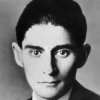
Franz Kafka
Franz Kafkawas a German-language writer of novels and short stories who is widely regarded as one of the major figures of 20th-century literature. His work, which fuses elements of realism and the fantastic, typically features isolated protagonists faced by bizarre or surrealistic predicaments and incomprehensible social-bureaucratic powers, and has been interpreted as exploring themes of alienation, existential anxiety, guilt, and absurdity. His best known works include "Die Verwandlung", Der Process, and Das Schloss. The term Kafkaesque has entered the English...
ProfessionNovelist
Date of Birth3 July 1883
CityPrague, Czech Republic
The Kafka paradox: art depends on truth, but truth, being indivisable, cannot know itself: to tell the truth is to lie. thus the writer is the truth, and yet when he speakes he lies.
Art flies around truth, but with the definite intention of not getting burnt. Its capacity lies in finding in the dark void a place where the beam of light can be intensely caught, without this having been perceptible before.
Picasso only registers the deformities which have not yet penetrated our consciousness. Art is a mirror which goes 'fast' like a watch - sometimes.
Our art is a way of being dazzled by truth: the light on the grotesquely grimacing retreating face is true, and nothing else.
The dream reveals the reality which conception lags behind. That is the horror of life-the terror of art.
This perversion of the truth, familiar to the artist though it was, always unnerved him afresh and proved too much for him. What was a consequence of the premature ending of his fast was here presented as the cause of it! To fight against this lack of understanding, against a whole world of nonunderstanding, was impossible.
There art two cardinal sins from which all others spring: Impatience and Laziness.
By believing passionately in something that still does not exist, we create it. The nonexistent is whatever we have not sufficiently desired.
Art is for the artist is only suffering through which he releases himself for further suffering.
You are free and that is why you are lost
One of the first signs of the beginning of understanding is the wish to die.
Hesitation before birth. If there is a transmigration of souls then I am not yet on the bottom rung. My life is a hesitation before birth.
What have I in common with Jews? I have hardly anything in common with myself
His weariness is that of the gladiator after the combat; his work was the whitewashing of a corner in a state official's office