Frederick Buechner
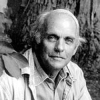
Frederick Buechner
Carl Frederick Buechneris an American writer and theologian. He is an ordained Presbyterian minister and the author of more than thirty published books. His work encompasses different genres, including fiction, autobiography, essays and sermons, and his career has spanned six decades. Buechner's books have been translated into many languages for publication around the world. He is best known for his works A Long Day's Dying; The Book of Bebb, a tetralogy based on the character Leo Bebb published in 1979;...
NationalityAmerican
ProfessionNovelist
Date of Birth11 July 1926
CountryUnited States of America
It’s less the words they say than those they leave unsaid that split old friends apart.
God knows we have our own demons to be cast out, our own uncleanness to be cleansed. Neurotic anxiety happens to be my own particular demon, a floating sense of doom that has ruined many of what could have been, should have been, the happiest days of my life, and more than a few times in my life I have been raised from such ruins, which is another way of saying that more than a few times in my life I have been raised from death - death of the spirit anyway, death of the heart - by the healing power that Jesus calls us both to heal with and to be healed by.
Through the power that memory gives us of thinking, feeling, imagining our way back through time we can at long last finally finish with the past in the sense of removing its power to hurt us and other people and to stunt our growth as human beings.
The original, shimmering self gets buried so deep that most of us end up hardly living out of it at all. Instead we live out all the other selves, which we are constantly putting on and taking off like coats and hats against the world’s weather
When [our secrets] are sad and hurtful secrets, like my father's death, we can in a way honor the hurt by letting ourselves feel it as we never let ourselves feel it before, and then, having felt it, by laying it aside; we can start to take care of ourselves the way we take care of people we love.
Your vocation lies in the intersection of the world's deep need and your deep joy.
Without somehow destroying me in the process, how could God reveal himself in a way that would leave no room for doubt? If there were no room for doubt, there would be no room for me.
I could, of course, have done no more if no less than affiliated myself in one way or another with a particular church, could have simply read books about Christianity, talked to Christian people, set out to discover something about what a Christian life is supposed to involve and then tried as best I could to live one. But, on the one hand, that didn't seem enough to me, and on the other, it seemed to much.
In the Christian sense, love is not primarily an emotion but an act of the will. When Jesus tells us to love our neighbors, he is not telling us to love them in the sense of responding to them with a cozy emotional feeling. You can as well produce a cozy emotional feeling as you can a cough or sneeze. On the contrary, he is telling us to love our neighbors in the sense of being willing to work for their well-being even if it means sacrificing our well-being to that end.
We are in constant danger of being not actors in the drama of our lives but reactors, to go where the world takes us, to drift with whatever current happens to be running the strongest.
At least to look back over their own lives, as I have looked back over mine, for certain themes and patterns and signals that are so easy to miss when you're caught up in the process of living them. If God speaks to us at all other than through such official channels as the Bible and the church, then I think he speaks to us largely through what happens to us, so listen to what has happened to you-for the sound, above all else, of his voice.
Religion points to that area of human experience where in one way or another man comes upon mystery as a summons to pilgrimage.
She was right that reality can be harsh and that you shut your eyes to it only at your peril because if you do not face up to the enemy in all his dark power, then the enemy will come up from behind some dark day and destoy you while you are facing the other way.
... in the long run, there can be no joy for anybody until there is joy finally for us all