Frederick Buechner
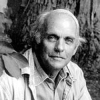
Frederick Buechner
Carl Frederick Buechneris an American writer and theologian. He is an ordained Presbyterian minister and the author of more than thirty published books. His work encompasses different genres, including fiction, autobiography, essays and sermons, and his career has spanned six decades. Buechner's books have been translated into many languages for publication around the world. He is best known for his works A Long Day's Dying; The Book of Bebb, a tetralogy based on the character Leo Bebb published in 1979;...
NationalityAmerican
ProfessionNovelist
Date of Birth11 July 1926
CountryUnited States of America
Listen to your life. See it for the fathomless mystery that it is. In the boredom and pain of it no less than in the excitement and gladness: touch, taste, smell your way to the holy and hidden heart of it because in the last analysis all moments are key moments, and life itself is grace.
Like Buddha under the Bo tree, Jesus, on his tree, has his eyes closed too. The difference is this. The pain and sadness of the world that Buddha's eyes close out is the pain and sadness of the world that the eyes of Jesus close in.
The fearsome blessing of that hard time continues to work itself out in my life in the same way we're told the universe is still hurtling through outer space under the impact of the great cosmic explosion.... I think grace sometimes explodes into our lives like that-sending our pain, terror, astonishment hurtling through inner space until by grace they become Orion, Cassiopeia, Polaris to give us our bearings, to bring us into something like full being at last.
If our pain doesn't destroy us, it just might transform us into truly human beings at last.
Of the Seven Deadly Sins, anger is possibly the most fun. To lick your wounds, to smack your lips over grievances long past, to roll over your tongue the prospect of bitter confrontations still to come, to savor to the last toothsome morsel both the pain you are given and the pain you are giving back--in many ways it is a feast fit for a king. The chief drawback is that what you are wolfing down is yourself. The skeleton at the feast is you.
Being a good steward of your pain. . . . It involves being alive to your life. It involves taking the risk of being open, of reaching out, of keeping in touch with the pain as well as the joy of what happens because at no time more than at a painful time do we live out of the depths of who we are instead of out of the shallows.
Listen to your life. See it for the fathomless mystery it is. In the boredom and pain of it, no less than in the excitement and gladness: touch, taste, smell your way to the holy and hidden heart of it, because in the last analysis all moments are key moments, and life itself is grace.
Lord, catch me off guard today. Surprise me with some moment of beauty or pain so that at least for the moment, I may be startled into seeing that you are here in all your splendor, always and everywhere, barely hidden, beneath, beyond, within this life I breathe.
The grace of God means something like: Here is your life. You might never have been, but you are because the party wouldn't have been complete without you.
Vocation is the place where the world's greatest need and a person's greatest joy meet.
At the evening of our day, we shall be judged by our loving.
Envy is the consuming desire to have everybody else as unsuccessful as you are.
Love yourself not in some egocentric, self-serving sense but love yourself the way you would love your friend in the sense of taking care of yourself, nourishing yourself, trying to understand, comfort, and strengthen yourself.
... the world can give you these glimpses as well as fairy tales can--the smell of rain, the dazzle of sun on white clapboard with the shadows of ferns and wash on the line, the wildness of a winter storm when in the house the flame of a candle doesn't even flicker.