Garrett Hardin
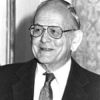
Garrett Hardin
Garrett James Hardinwas an American ecologist and philosopher who warned of the dangers of overpopulation. His exposition of the tragedy of the commons, in a famous 1968 paper in Science, called attention to "the damage that innocent actions by individuals can inflict on the environment". He is also known for Hardin's First Law of Human Ecology: "You cannot do only one thing", which "modestly implies that there is at least one unwanted consequence"...
NationalityAmerican
ProfessionEnvironmentalist
Date of Birth21 April 1915
CountryUnited States of America
In a finite world this means that the per capita share of the world's goods must steadily decrease.
Incommensurables cannot be compared.
Of course, a positive growth rate might be taken as evidence that a population is below its optimum.
The only kind of coercion I recommend is mutual coercion, mutually agreed upon by the majority of the people affected.
The optimum population is, then, less than the maximum.
The social arrangements that produce responsibility are arrangements that create coercion, of some sort.
Using the commons as a cesspool does not harm the general public under frontier conditions, because there is no public, the same behavior in a metropolis is unbearable.
People are the quintessential element in all technology... Once we recognize the inescapable human nexus of all technology our attitude toward the reliability problem is fundamentally changed.
The greatest folly is to accept expert statements uncritically. At the very least, we should always seek another opinion.
Every plausible policy must be followed by the question 'And then what?'
In the specific case of abortion, the matter is particularly easy in that no woman wants a late abortion. Once abortion was made legal, the age of the aborted fetus went down. The slope slipped in the other direction. If we legalize RU-486 and other similar new drugs, the age will fall to one week or less and start approaching zero. The slippery slope will slide in the other direction. The only reason we have late abortions is because we make early abortion difficult.
Ecological differentiation is the necessary condition for coexistence.
Religious reasons, which is no reason. I notice Skeptic had a review of Dennett's book, Darwin's Dangerous Idea. Religious reasons amount to what Dennett terms "skyhooks." Do you believe in skyhooks? I don't.
The morality of an act is a function of the state of the system at the time it is performed.