Garrett Hardin
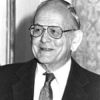
Garrett Hardin
Garrett James Hardinwas an American ecologist and philosopher who warned of the dangers of overpopulation. His exposition of the tragedy of the commons, in a famous 1968 paper in Science, called attention to "the damage that innocent actions by individuals can inflict on the environment". He is also known for Hardin's First Law of Human Ecology: "You cannot do only one thing", which "modestly implies that there is at least one unwanted consequence"...
NationalityAmerican
ProfessionEnvironmentalist
Date of Birth21 April 1915
CountryUnited States of America
In a competitive world of limited resources, total freedom of individual action is intolerable
Society does not need more children; but it does need more loved children. Quite literally, we cannot afford unloved children - but we pay heavily for them every day. There should not be the slightest communal concern when a woman elects to destroy the life of her thousandth-of-an-ounce embryo. But all society should rise up in alarm when it hears that a baby that is not wanted is about to be born.
No one should be able to enter a wilderness by mechanical means.
You cannot do only one thing.
There is nothing more dangerous than a shallow thinking compassionate person
The rational herdsman concludes that the only sensible course for him to pursue is to add another animal to his herd. And another; and another . . . But this is the conclusion reached by each and every rational herdsman sharing a commons. Therein is the tragedy. Each man is locked into a system that compels him to increase his herd without limit — in a world that is limited. Ruin is the destination toward which all men rush, each pursuing his own best interest in a society that believes in the freedom of the commons. Freedom in a commons brings ruin to all.
The rational man finds that his share of the cost of the wastes he discharges into the commons is less than the cost of purifying his wastes before releasing them.
You can never do merely one thing. The law applies to any action that changes something in a complex system. The point is that an action taken to alleviate a problem will trigger several effects, some of which may offset or even negate the one intended.