George Berkeley
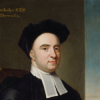
George Berkeley
George Berkeley— known as Bishop Berkeley— was an Anglo-Irish philosopher whose primary achievement was the advancement of a theory he called "immaterialism". This theory denies the existence of material substance and instead contends that familiar objects like tables and chairs are only ideas in the minds of perceivers, and as a result cannot exist without being perceived. Berkeley is also known for his critique of abstraction, an important premise in his argument for immaterialism...
NationalityIrish
ProfessionPhilosopher
Date of Birth12 March 1685
CountryIreland
Whatever the world thinks, he who hath not much meditated upon God, the human soul, and the summum bonum, may possibly make a thriving earthworm, but will most indubitably make a sorry patriot and a sorry statesman.
Certainly he who can digest a second or third fluxion need not, methinks, be squeamish about any point in divinity.
Westward the course of empire takes its way; The four first acts already past, A fifth shall close the drama with the day: Time's noblest offspring is the last.
Our youth we can have but to-day, We may always find time to grow old.
Upon the whole, I am inclined to think that the far greater part, if not all, of those difficulties which have hitherto amused philosophers, and blocked up the way to knowledge, are entirely owing to our selves. That we have first raised a dust, and then complain, we cannot see.
Nothing can be plainer, than that the motions, changes, decays, and dissolutions, which we hourly see befall natural bodies (and which is what we mean by the course of nature), cannot possibly affect an active, simple, uncompounded substance: such a being therefore is indissoluble by the force of nature, that is to say, the soul of man is naturally immortal.
It is a mistake, to think the same thing affects both sight and touch. If the same angle or square, which is the object of touch,be also the object of vision, what should hinder the blind man, at first sight, from knowing it?
The method of Fluxions is the general key by help whereof the modern mathematicians unlock the secrets of Geometry, and consequently of Nature.
The table I write on I say exists ... meaning thereby that if I was in my study I might perceive it, or that some other spirit actually does perceive it.
I imagine that thinking is the great desideratum of the present age; and the cause of whatever is done amiss may justly be reckoned the general neglect of education in those who need it most, the people of fashion. What can be expected where those who have the most influence have the least sense, and those who are sure to be followed set the worst examples?
Of all men living [priests] are our greatest enemies. If it were possible, they would extinguish the very light of nature, turn the world into a dungeon, and keep mankind for ever in chains and darkness.
I might as well doubt of my own being, as of the being of those things I actually see and feel.
[Christianity] neither enjoins the nastiness of the Cynic, nor the insensibility of the Stoic.
What doubts, what hypotheses, what labyrinths of amusement, what fields of disputation, what an ocean of false learning, may be avoided by that single notion of immaterialism!