George Berkeley
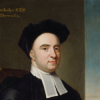
George Berkeley
George Berkeley— known as Bishop Berkeley— was an Anglo-Irish philosopher whose primary achievement was the advancement of a theory he called "immaterialism". This theory denies the existence of material substance and instead contends that familiar objects like tables and chairs are only ideas in the minds of perceivers, and as a result cannot exist without being perceived. Berkeley is also known for his critique of abstraction, an important premise in his argument for immaterialism...
NationalityIrish
ProfessionPhilosopher
Date of Birth12 March 1685
CountryIreland
Others indeed may talk, and write, and fight about liberty, and make an outward pretence to it but the free-thinker alone is truly free.
What is mind? No matter. What is matter? Never mind.
If we admit a thing so extraordinary as the creation of this world, it should seem that we admit something strange, and odd, and new to human apprehension, beyond any other miracle whatsoever.
He who says there is no such thing as an honest man, you may be sure is himself a knave.
From my own being, and from the dependency I find in myself and my ideas, I do, by an act of reason, necessarily infer the existence of a God, and of all created things in the mind of God.
Whatever is immediately perceived is an idea: and can any idea exist out of the mind?
To be is to be perceived
Man is an animal, formidable both from his passions and his reason; his passions often urging him to great evils, and his reason furnishing means to achieve them. To train this animal, and make him amenable to order; to inure him to a sense of justice and virtue; to withhold him from ill courses by fear, and encourage him in his duty by hopes; in short, to fashion and model him for society, hath been the aim of civil and religious institutions; and, in all times, the endeavor of good and wise men. The aptest method for attaining this end hath been always judged a proper education.
For my own private satisfaction, I had rather be master of my own time than wear a diadem.
Truth is the cry of all, but the game of few.
Whenever I attempt to frame a simple idea of time, abstracted from the succession of ideas in my mind, which flows uniformly, and is participated by all beings, I am lost and embrangled in inextricable difficulties.
I do not deny the existence of material substance merely because I have no notion of it, but because the notion of it is inconsistent, or in other words, because it is repugnant that there should be a notion of it.
This perceiving, active being is what I call mind, spirit, soul, or myself. By which words I do not denote any one of my ideas, but a thing entirely distinct from them, wherein they exist, or, which is the same thing, whereby they are perceived; for the existence of an idea consists in being perceived.
That neither our thoughts, nor passions, nor ideas formed by the imagination, exist without the mind, is what every body will allow.