George Berkeley
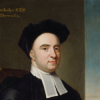
George Berkeley
George Berkeley— known as Bishop Berkeley— was an Anglo-Irish philosopher whose primary achievement was the advancement of a theory he called "immaterialism". This theory denies the existence of material substance and instead contends that familiar objects like tables and chairs are only ideas in the minds of perceivers, and as a result cannot exist without being perceived. Berkeley is also known for his critique of abstraction, an important premise in his argument for immaterialism...
NationalityIrish
ProfessionPhilosopher
Date of Birth12 March 1685
CountryIreland
Many things, for aught I know, may exist, whereof neither I nor any other man hath or can have any idea or notion whatsoever.
If what you mean by the word "matter" be only the unknown support of unknown qualities, it is no matter whether there is such a thing or no, since it no way concerns us; and I do not see the advantage there is in disputing about what we know not what, and we know not why.
The most ingenious men are now agreed, that [universities] are only nurseries of prejudice, corruption, barbarism, and pedantry.
It is impossible that a man who is false to his friends and neighbours should be true to the public.
To me it seems that liberty and virtue were made for each other. If any man wish to enslave his country, nothing is a fitter preparative than vice; and nothing leads to vice so surely as irreligion.
Where the people are well educated, the art of piloting a state is best learned from the writings of Plato.
To be a good patriot, a man must consider his countrymen as God's creatures, and himself as accountable for his acting towards them.