George Berkeley
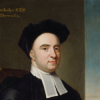
George Berkeley
George Berkeley— known as Bishop Berkeley— was an Anglo-Irish philosopher whose primary achievement was the advancement of a theory he called "immaterialism". This theory denies the existence of material substance and instead contends that familiar objects like tables and chairs are only ideas in the minds of perceivers, and as a result cannot exist without being perceived. Berkeley is also known for his critique of abstraction, an important premise in his argument for immaterialism...
NationalityIrish
ProfessionPhilosopher
Date of Birth12 March 1685
CountryIreland
A mind at liberty to reflect on its own observations, if it produce nothing useful to the world, seldom fails of entertainment to itself.
Religion is the centre which unites, and the cement which connects the several parts of members of the political body.
So long as I confine my thoughts to my own ideas divested of words, I do not see how I can be easily mistaken.
I had rather be an oyster than a man, the most stupid and senseless of animals.
To be is to be perceived (Esse est percipi)." Or, "If a tree falls in the forest and no one is there to hear it, does it make a sound?
All the choir of heaven and furniture of earth - in a word, all those bodies which compose the frame of the world - have not any subsistence without a mind.
It would much conduce to the public benefit, if, instead of discouraging free-thinking, there was erected in the midst of this free country a dianoetic academy, or seminary for free-thinkers, provided with retired chambers, and galleries, and shady walks and groves, where, after seven years spent in silence and meditation, a man might commence a genuine free-thinker, and from that time forward, have license to think what he pleased, and a badge to distinguish him from counterfeits.
The real essence, the internal qualities, and constitution of even the meanest object, is hid from our view; something there is inevery drop of water, every grain of sand, which it is beyond the power of human understanding to fathom or comprehend. But it is evidentthat we are influenced by false principles to that degree as to mistrust our senses, and think we know nothing of those things which we perfectly comprehend.
Doth the Reality of sensible things consist in being perceived? or, is it something distinct from their being perceived, and that bears no relation to the mind?
The same principles which at first view lead to skepticism, pursued to a certain point, bring men back to common sense.
The eye by long use comes to see even in the darkest cavern: and there is no subject so obscure but we may discern some glimpse of truth by long poring on it.
The question between the materialists and me is not, whether things have a real existence out of the mind of this or that person, but whether they have an absolute existence, distinct from being perceived by God, and exterior to all minds.
Atheism ... that bugbear of women and fools ... is the very top and perfection of free-thinking. It is the grand arcanum to which a true genius naturally riseth, by a certain climax or gradation of thought, and without which he can never possess his soul in absolute liberty and repose.
How often must I repeat, that I know or am conscious of my own being; and that I myself am not my ideas, but somewhat else, a thinking, active principle that perceives, knows, wills, and operates about ideas?