George Berkeley
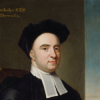
George Berkeley
George Berkeley— known as Bishop Berkeley— was an Anglo-Irish philosopher whose primary achievement was the advancement of a theory he called "immaterialism". This theory denies the existence of material substance and instead contends that familiar objects like tables and chairs are only ideas in the minds of perceivers, and as a result cannot exist without being perceived. Berkeley is also known for his critique of abstraction, an important premise in his argument for immaterialism...
NationalityIrish
ProfessionPhilosopher
Date of Birth12 March 1685
CountryIreland
In short, if there were external bodies, it is impossible we should ever come to know it; and if there were not, we might have the very same reasons to think there were that we have now.
I am apt to think, if we knew what it was to be an angel for one hour, we should return to this world, though it were to sit on the brightest throne in it, with vastly more loathing and reluctance than we would now descend into a loathsome dungeon or sepulchre.
That the discovery of this great truth, which lies so near and obvious to the mind, should be attained to by the reason of so veryfew, is a sad instance of the stupidity and inattention of men, who, though they are surrounded with such clear manifestations of the Deity, are yet so little affected by them, that they seem as it were blinded with excess of light.
God is a being of transcendent and unlimited perfections: his nature therefore is incomprehensible to finite spirits.
All men have opinions, but few think.
Few men think, yet all will have opinions.
The fawning courtier and the surly squire often mean the same thing,--each his own interest.
That thing of hell and eternal punishment is the most absurd, as well as the most disagreeable thought that ever entered into the head of mortal man.
The world is like a board with holes in it, and the square men have got into the round holes, and the round into the square.
That food nourishes, sleep refreshes, and fire warms us; that to sow in the seed-time is the way to reap in the harvest, and, in general, that to obtain such or such ends, such or such means are conducive, all this we know, not by discovering any necessary connexion between our ideas, but only by the observation of the settled laws of nature, without which we should be all in uncertainty and confusion, and a grown man no more know how to manage himself in the affairs of life than an infant just born.
Make a point never go clear, it is great odds that a man whose habits and the bent of whose mind lie a contrary way, shall be unable to comprehend it. So weak a thing is reason in competition with inclination.
All those who write either explicitly or by insinuation against the dignity, freedom, and immortality of the human soul, may so far forth be justly said to unhinge the principles of morality, and destroy the means of making men reasonably virtuous.
All that stock of arguments [the skeptics] produce to depreciate our faculties, and make mankind appear ignorant and low, are drawn principally from this head, to wit, that we are under an invincible blindness as to the true and real nature of things.
Did men but consider that the sun, moon, and stars, and every other object of the senses, are only so many sensations in their minds, which have no other existence but barely being perceived, doubtless they would never fall down and worship their own ideas; but rather address their homage to that eternal invisible Mind which produces and sustains all things.