George Steiner
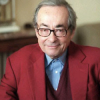
George Steiner
Francis George Steiner, FBA is a French-born American literary critic, essayist, philosopher, novelist, and educator. He has written extensively about the relationship between language, literature and society, and the impact of the Holocaust. An article in The Guardian described Steiner as a "polyglot and polymath", saying that he is either "often credited with recasting the role of the critic", or a "pretentious namedropper" whose "range comes at the price of inaccuracy" and "complacency"...
NationalityAmerican
ProfessionCritic
Date of Birth23 April 1929
CountryUnited States of America
The ordinary man casts a shadow in a way we do not quite understand. The man of genius casts light.
He who has read Kafka's Metamorphosis and can look into his mirror unflinching may technically be able to read print, but is illiterate in the only sense that matters.
The notion of travelling to far places in order to study alien peoples and cultures, is unique to Western man; it springs from the predatory genius of the Greeks; no primitive peoples have ever come to study us. This is, on the one hand, a disinterested, intellectually inspired impulse. It is one of our glories. But it is, on the other, part and parcel of exploitation. [] The Western obsession with inquiry, with analysis, with the classification of all living forms, is itself a mode of subjugation, of psychological and technical mastery.
To be a European is to try to negotiate morally, intellectually and existentially the opposing statements and praxis of the city of Socrates and the city of Isaiah.
The immense majority of human biographies are a gray transit between domestic spasm and oblivion.
The age of the book is almost gone.
The whispers of shared ecstasy are choral.
The capacity for imaginative reflex, for moral risk in any human being is not limitless; on the contrary, it can be rapidly absorbed by fictions, and thus the cry in the poem may come to sound louder, more urgent, more real than the cry in the street outside. The death in the novel may move us more potently than the death in the next room. Thus there may be a covert, betraying link between the cultivation of aesthetic response and the potential of personal inhumanity.
To starve a child of the spell of the story, of the canter of the poem, oral or written, is a kind of living burial. It is to immure him in emptiness.
The intellectual is, quite simply, a human being who has a pencil in his or her hand when reading a book.
If future society assumes the contours foretold by Marxism, if the jungle of our cities turns to the polis of man and the dreams of anger are made real, the representative art will be high comedy. Art will be the laughter of intelligence, as it is in Plato, in Mozart, in Stendhal.
The Oresteia, King Lear, Dostoevsky's The Devils no less than the art of Giotto or the Passions of Bach, inquire into, dramatize, the relations of man and woman to the existence of the gods or of God.
A good deal of classical music is, today, the opium of the good citizen.
Nothing in the next-door world of Dachau impinged on the great winter cycle of Beethoven chamber music played in Munich. No canvases came off museum walls as the butchers strolled reverently past, guide-books in hand.