Gregory Benford
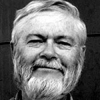
Gregory Benford
Gregory Benfordis an American science fiction author and astrophysicist who is on the faculty of the Department of Physics and Astronomy at the University of California, Irvine. He is also a contributing editor of Reason magazine...
NationalityAmerican
ProfessionNovelist
Date of Birth30 January 1941
CountryUnited States of America
attraction both fans invented knows major net nobody proximity utterly
Virtuality - connection without proximity - is a major attraction in both fandom and the Net. Nobody knows you're a dog through the U.S. mail, either. Fans could be utterly different in their fanzine persona, which may be why both fandom and the Net were invented by individualistic Americans.
godlike greater people universes
We have a name for people who create universes - they're called gods. There is no greater hubris than to think that we could take the place of godlike implications.
You don't actually have ideas; ideas have you.
both built people program readers science
The people who built the space program - both Soviet and U.S. - were readers of science fiction.
age art came swamped
This was the 1940s; there was no television. It was a different age - it was not swamped by media; it was swamped by reality, and storytelling was a very big art where I came from.
avoid bodily closed develop genuine harm nasa needed required science truly useful
Very little useful science got done in the space station. NASA never did the experiments needed to develop the technologies required for a genuine interplanetary expedition: centrifugal gravity to avoid bodily harm and a truly closed biosphere.
five lie minutes morning open problems recall research review sit trained wake
At the end of the day, I sit down for about five minutes and review all the problems I'm working on, research problems or writing problems, and I go to sleep. Then when I wake up in the morning, I've trained myself to not open my eyes and to just lie there and recall the problems and see if there's anything there.
fiction people science scientists tells time virtually visible
My feeling is that science is virtually an unexplored ground. It's very visible - more so all the time - but there's no fiction that tells us how scientists think, and they really don't think the way that other people do.
air build carbon fraction gas greenhouse grow main mass plants remove return season simplest since taking themselves tie tiny within
The simplest way to remove carbon dioxide, the main greenhouse gas, is to grow plants - preferably trees, since they tie up more of the gas in cellulose, meaning it will not return to the air within a season or two. Plants build themselves out of air and water, taking only a tiny fraction of their mass from the soil.
alabama coast critics famous faulkner gulf miss southern standard typical
The thing that most critics miss about Faulkner is that his famous storytelling voice is, in fact, a standard Southern storytelling voice that is typical of the Gulf Coast - Mississippi, Alabama and so on.
became decline fiction prepared routes science writers
Science fiction writers didn't predict the fade-out of NASA's manned space operations, and they weren't prepared with alternative routes to space when that decline became undeniable.
born companies cover dna genetic insurance myriad opens scare shall sure vast worked
DNA sequencing opens vast ethical issues. We shall be able to know who has defective genes. What will it mean when we can be sure we're not all born equal? Worked out, the implications will scare a lot of people. Insurance companies will not want to cover those with a genetic predisposition to illness, for example. Here lurk myriad lawsuits.
high legendary repartee sharper table
Dinner at college high table is one of the legendary experiences of England. I could remember keenly each one I had attended; the repartee is sharper than the cutlery.
car combustion computers engine experiment gave inevitably internal leading practical rocket theory
Electromagnetic theory and experiment gave us the telephone, radio, TV, computers, and made the internal combustion engine practical - thus, the car and airplane, leading inevitably to the rocket and outer-space exploration.