Gregory Benford
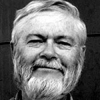
Gregory Benford
Gregory Benfordis an American science fiction author and astrophysicist who is on the faculty of the Department of Physics and Astronomy at the University of California, Irvine. He is also a contributing editor of Reason magazine...
NationalityAmerican
ProfessionNovelist
Date of Birth30 January 1941
CountryUnited States of America
decades masses master raw resources system vast
Terraforming our moon will take many decades and vast abilities. Before we can begin, we'll have to master the resources of our solar system - especially transporting raw masses over interplanetary distances.
early fiction future science seeing took
Seeing the space future through science fiction can be difficult. Much science fiction of the early era, the 1950s through the '70s, took an expansionist view.
anxious carry displaced eternal fear losing lost nostalgia origins
Nostalgia is eternal for Americans. We are often displaced from our origins and carry anxious memories of that lost past. We fear losing our bearings.
attempted best closeness endeavor huge near resources tricky
The moon's closeness is a huge advantage: To make it habitable, we would first have to bombard it with water-ice comets, a tricky endeavor best attempted with the many resources waiting on and near Earth.
change driven fiction goes literature presents public reading religion science seldom technology
As a literature of change driven by technology, science fiction presents religion to a part of the reading public that probably seldom goes to church.
amateur carrying columns future grew humor personal pieces reflected science stylish thoughtful
As fandom grew more variegated, genzines reflected a broadening of interests, carrying personal columns of humor and reflection, science articles, amateur fiction, stylish gossip, and inevitably, thoughtful pieces on the future of fandom.
best casual challenged education enjoyed father high idyllic pervasive rural school southern teachers
Reared in rural southern Alabama, we enjoyed an idyllic Huck Finn boyhood. But education there was casual at best. Our mother and father were high school teachers and challenged the pervasive easy-going ignorance.
best bugs developed enjoy insects keeps plants range temperate wide
In temperate zones, winter is the best insecticide; it keeps the bugs in check. The tropics enjoy no such respite, so plants there have developed a wide range of alkaloids that kill off nosy insects and animals.
deal full great heavy lecturing professor time university
Because I've been a full professor doing research and lecturing at the University of California, I didn't have a lot of time to write, so I have always used my unconscious a great deal to do the really heavy lifting.
cultures ignores invoking less nature supremacy work
Invoking nature with its implied supremacy ignores that many cultures have fundamentally differing ideas of even what nature is, much less how it should work.
basic doubts fan featured great knew onto phil philip quantum science worlds
In science fiction, basic doubts featured prominently in the worlds of Philip K. Dick. I knew Phil for 25 years, and he was always getting onto me, a scientist. He was a great fan of quantum uncertainty, epistemology in science, the lot.
devotion discussion genre lifelong ongoing pleasures shared within
Genre pleasures are many, but the quality of shared values within an ongoing discussion may be the most powerful, enlisting lifelong devotion in its fans.
avoid century convenient crop history large leads particle particles physics point puzzling theory
Indeed, the history of 20th century physics was in large measure about how to avoid the infinities that crop up in particle theory and cosmology. The idea of point particles is convenient but leads to profound, puzzling troubles.
brown cities color drop dump food form foundation govern green hugely million rich sea tiny waters
In coastal waters rich in runoff, plankton can swarm densely, a million in a drop of water. They color the sea brown and green where deltas form from big rivers, or cities dump their sewage. Tiny yet hugely important, plankton govern how well the sea harvests the sun's bounty, and so are the foundation of the ocean's food chain.