Hannah Arendt
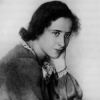
Hannah Arendt
Johanna "Hannah" Arendtwas a German-born Jew and American political theorist. Though often described as a philosopher, she rejected that label on the grounds that philosophy is concerned with "man in the singular" and instead described herself as a political theorist because her work centers on the fact that "men, not Man, live on the earth and inhabit the world." She escaped Europe during the Holocaust, becoming an American citizen. Her works deal with the nature of power, and the subjects...
NationalityGerman
ProfessionPhilosopher
Date of Birth14 October 1906
CityHanover, Germany
CountryGermany
Loving life is easy when you are abroad. Where no one knows you and you hold your life in your hands all alone, you are more master of yourself than at any other time
Forgiveness is the key to action and freedom.
Nothing we use or hear or touch can be expressed in words that equal what we are given by the senses.
If you ask a member of this generation two simple questions: ''How do you want the world to be in fifty years?'' and ''What do you want your life to be like five years from now?'' the answers are quite often preceded by ''Provided there is still a world'' and ''Provided I am still alive.'' To the often-heard question, Who are they, this new generation? one is tempted to answer, Those who hear the ticking. And to the other question, Who are they who utterly deny them? the answer may well be, Those who do not know, or refuse to face, things as they really are.
It was as though in those last minutes he (Eichmann) was summing up the lessons that this long course in human wickedness had taught us the lesson of the fearsome, word-and-thought-defying banality of evil
For the things we have to learn before we can do them, we learn by doing them.
... we have almost succeeded in leveling all human activities to the common denominator of securing the necessities of life and providing for their bundance. Whatever we do, we are supposed to do for the sake of "making a living;" such is the verdict of society, and the number of people, especially in the professions who might challenge it, has decreased rapidly. The only exception society is willing to grant is to the artist, who, strictly speaking, is the only "worker" left in a laboring society.
Wherever the relevance of speech is at stake, matters become political by definition, for speech is what makes man a political being.