Hannah Arendt
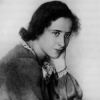
Hannah Arendt
Johanna "Hannah" Arendtwas a German-born Jew and American political theorist. Though often described as a philosopher, she rejected that label on the grounds that philosophy is concerned with "man in the singular" and instead described herself as a political theorist because her work centers on the fact that "men, not Man, live on the earth and inhabit the world." She escaped Europe during the Holocaust, becoming an American citizen. Her works deal with the nature of power, and the subjects...
NationalityGerman
ProfessionPhilosopher
Date of Birth14 October 1906
CityHanover, Germany
CountryGermany
Power corresponds to the human ability not just to act but to act in concert. Power is never the property of an individual; it belongs to a group and remains in existence only so long as the group keeps together. When we say of somebody that he is 'in power' we actually refer to his being empowered by a certain number of people to act in their name. The moment the group, from which the power originated to begin with ... disappears, 'his power' also vanishes.
Love, by its very nature, is unworldly, and it is for this reason rather than its rarity that it is not only apolitical but antipolitical, perhaps the most powerful of all antipolitical forces.
every political structure, new or old, left to itself develops stabilizing forces which stand in the way of constant transformation and expansion. Therefore all political bodies appear to be temporary obstacles when they are seen as part of an eternal stream of growing power.
power can be thought of as the never-ending, self-feeding motor of all political action that corresponds to the legendary unending accumulation of money that begets money.
The extreme form of power is All against One, the extreme form of violence is One against All.
To speak of the impotence of power is no longer a witty paradox.
Legends have always played a powerful role in the making of history. ... Without ever relating facts reliably, yet always expressing their true significance, they offered a truth beyond realities, a remembrance beyond memories.
Absence of thought is indeed a powerful factor in human affairs, statistically speaking the most powerful, not just in the conduct of the many but in the conduct of all.
All political institutions are manifestations and materializations of power; they petrify and decay as soon as the living power of the people ceases to uphold them.
the fateful equating of power with violence, of the political with government, and of government with a necessary evil has begun.
Power and violence are opposites; where the one rules absolutely, the other is absent. Violence appears where power is in jeopardy, but left to its own course it ends in power's disappearance.
To be sure, nothing is more important to the integrity of the universities than a rigorously enforced divorce from war-oriented research and all connected enterprises.
The human condition is such that pain and effort are not just symptoms which can be removed without changing life itself; they are the modes in which life itself, together with the necessity to which it is bound, makes itself felt. For mortals, the easy life of the gods would be a lifeless life.
What makes it so plausible to assume that hypocrisy is the vice of vices is that integrity can indeed exist under the cover of all other vices except this one. Only crime and the criminal, it is true, confront us with the perplexity of radical evil; but only the hypocrite is really rotten to the core.