Herbie Hancock
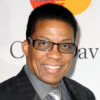
Herbie Hancock
Herbert Jeffrey "Herbie" Hancockis an American pianist, keyboardist, bandleader, composer and actor. Starting his career with Donald Byrd, he shortly thereafter joined the Miles Davis Quintet where Hancock helped to redefine the role of a jazz rhythm section and was one of the primary architects of the post-bop sound. He was one of the first jazz musicians to embrace synthesizers and funk music. Hancock's music is often melodic and accessible; he has had many songs "cross over" and achieved success...
NationalityAmerican
ProfessionPianist
Date of Birth12 April 1940
CityChicago, IL
CountryUnited States of America
My taste is broad, and my interest in exploration is broad,
So, he taught me how to play a simple riff and I somehow found a couple of other notes to play, then I learned how to watch his left hand and I learned where the notes were.
So in other words, we were constantly challenged to grow, and that's what a master does.
On a human level, the garbage man is just as important as the teacher or a rock star or a president, because you have to have them. The world would have been dead a long time ago without garbage men.
Oh yeah, the funny thing is that all my pictures in the past were all smiley pictures, and it's only been in recent pictures where I've had some where I don't smile.
I started playing piano when I was 7. And I started with classical lessons. Then I really got exposed to jazz.
Other highlights? When I started practicing Buddhism 21 years ago. Marrying the woman I married 26 years ago; my wife is quite a woman. The birth of my daughter. Joining Miles Davis' band.
People put you on a pedestal when you become famous, in their eyes, or if they really respect your work, they might put you on a pedestal, but I didn't get that as a kid.
And you allow yourself to play off that plane. You're in this dark room of unknowns, you allow yourself to go there.
Another convention is that the drummer and bass player are timekeepers, but there's no reason they have to be bound to that.
Even during the major avant-garde period of jazz in the late '60s and early '70s, the songs usually had melodies, some harmonic starting-off point, or something to unify a particular piece in the beginning.
Things that happen to you are events. It's what you do with them that determine whether they're going to be problems or solutions.
Things like creating in the moment, being in the moment, trusting your instincts, not being afraid to go outside the comfort zone.
I've started something called the Rhythm of Life Foundation to encourage the technological community to develop ideas and software that directly effect the advancement of humanity.