Isaac Bashevis Singer
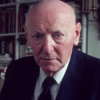
Isaac Bashevis Singer
Isaac Bashevis Singerwas a Polish-born Jewish author in Yiddish, awarded the Nobel Prize in Literature in 1978. The Polish form of his birth name was Icek Hersz Zynger. He used his mother's first name in an initial literary pseudonym, Izaak Baszewis, which he later expanded. He was a leading figure in the Yiddish literary movement, writing and publishing only in Yiddish. He was also awarded two U.S. National Book Awards, one in Children's Literature for his memoir A Day Of...
NationalityAmerican
ProfessionNovelist
Date of Birth14 July 1904
CountryUnited States of America
Those who run around with women don't walk tightropes. They find it hard enough to crawl on the ground.
There is a quiet humor in Yiddish and a gratitude for every day of life, every crumb of success, each encounter of love... In a figurative way, Yiddish is the wise and humble language of us all, the idiom of a frightened and hopeful humanity.
The very essence of literature is the war between emotion and intellect, between life and death. When literature becomes too intellectual - when it begins to ignore the passions, the emotions - it becomes sterile, silly, and actually without substance.
To me the Yiddish language and the conduct of those who spoke it are identical.
There must be a way for man to attain all possible pleasures, all the powers and knowledge that nature can grant him, and still serve God--a God who speaks in deeds, not in words, and whose vocabulary is the Cosmos.
The Yiddish mentality is not haughty. It does not take victory for granted. It does not demand and command but it muddles through, sneaks by, smuggles itself amidst the powers of destruction, knowing somewhere that God's plan for Creation is still at the very beginning.
If Moses had been paid newspaper rates for the Ten Commandments, he might have written the Two Thousand Commandments.
The storyteller and poet of our time, as in any other time, must be an entertainer of the spirit in the full sense of the word, not just a preacher of social or political ideals. There is no paradise for bored readers and no excuse for tedious literature that does not intrigue the reader, uplift him, give him the joy and the escape that true art always grants.
The sexual organs are the most sensitive organs of the human being. They are not diplomats. They tell the truth.
The pessimism of the creative person is not decadence but a mighty passion for the redemption of man.
The ghetto was not only a place of refuge for a persecuted minority but a great experiment in peace, in self-discipline and in humanism. As such it still exists and refuses to give up in spite of all the brutality that surrounds it. I was brought up among those people.
When literature becomes overly erudite, it means that interest in the art has gone and curiosity about the artist is what's important. It becomes a kind of idolatry.
While the poet entertains he continues to search for eternal truths, for the essence of being. In his own fashion he tries to solve the riddle of time and change, to find an answer to suffering, to reveal love in the very abyss of cruelty and injustice. Strange as these words may sound I often play with the idea that when all the social theories collapse and wars and revolutions leave humanity in utter gloom, the poet--whom Plato banned from his Republic--may rise up to save us all.
Every body resisted (the slaughterer) in its own fashion, tried to escape and seemed to argue with the Creator to its last breath.