Isaac Bashevis Singer
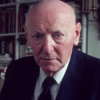
Isaac Bashevis Singer
Isaac Bashevis Singerwas a Polish-born Jewish author in Yiddish, awarded the Nobel Prize in Literature in 1978. The Polish form of his birth name was Icek Hersz Zynger. He used his mother's first name in an initial literary pseudonym, Izaak Baszewis, which he later expanded. He was a leading figure in the Yiddish literary movement, writing and publishing only in Yiddish. He was also awarded two U.S. National Book Awards, one in Children's Literature for his memoir A Day Of...
NationalityAmerican
ProfessionNovelist
Date of Birth14 July 1904
CountryUnited States of America
Writing has power, but its power has no vector. Writers can stir the mind, but they can't direct it. Time changes things, God changes things, the dictators change things, but writers can't change anything.
How can we speak of right and justice if we take an innocent creature and shed its blood? How can we pray to God for mercy if we ourselves have no mercy? Nobel laureate in literature.
The waste basket is the writer's best friend.
The New England conscience doesn't keep you from doing what you shouldn't - it just keeps you from enjoying it.
God gave us so many emotions, and so many strong ones. Every human being, even if he is an idiot, is a millionaire in emotions.
In our time, when the literature for adults is deteriorating, good books for children are the only hope, the only refuge.
I am not ashamed to admit that I belong to those who fantasize that literature is capable of bringing new horizons and new perspectives--philosophical, religious, aesthetical and even social.
I have heard from my father and mother all the answers that faith in God could offer to those who doubt and search for the truth. In our home and in many other homes the eternal questions were more actual than the latest news in the Yiddish newspaper. In spite of all the disenchantments and all my skepticism I believe that the nations can learn much from those Jews, their way of thinking, their way of bringing up children, their finding happiness where others see nothing but misery and humiliation.
I was brought up to believe in free will. Although I came to doubt all revelation, I can never accept the idea that the Universe is a physical or chemical accident, a result of blind evolution. Even though I learned to recognize the lies, the clichés and the idolatries of the human mind, I still cling to some truths which I think all of us might accept some day.
In the history of old Jewish literature there was never any basic difference between the poet and the prophet. Our ancient poetry often became law and a way of life.
It is a fact that the classics of Yiddish literature are also the classics of the modern Hebrew literature.
No technological achievements can mitigate the disappointment of modern man, his loneliness, his feeling of inferiority, and his fear of war, revolution and terror. Not only has our generation lost faith in Providence but also in man himself, in his institutions and often in those who are nearest to him.
When a human being kills an animal for food, he is neglecting his own hunger for justice.
If we have people with the power to tell a story, there will always be readers.