Jacob Bronowski
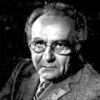
Jacob Bronowski
Jacob Bronowskiwas a British mathematician, historian of science, theatre author, poet and inventor. Of Polish-Jewish origin, he is best remembered as the presenter and writer of the 1973 BBC television documentary series, The Ascent of Man, and the accompanying book...
NationalityEnglish
ProfessionScientist
Date of Birth1 September 1908
inspirational education teacher
It is important that students bring a certain ragamuffin, barefoot irreverence to their studies; they are not here to worship what is known, but to question it.
writing science discovery
The most remarkable discovery made by scientists is science itself. The discovery must be compared in importance with the invention of cave-painting and of writing. Like these earlier human creations, science is an attempt to control our surroundings by entering into them and understanding them from inside. And like them, science has surely made a critical step in human development which cannot be reversed. We cannot conceive a future society without science.
faith men thinking
The Principle of Uncertainty fixed once for all the realisation that all knowledge is limited. It is an irony of history that at the very time when this was being worked out there should rise, under Hitler in Germany and other tyrants elsewhere, a counter-conception: a principle of monstrous certainty. When the future looks back on the 1930s it will think of them as a crucial confrontation of culture as I have been expounding it, the ascent of man, against the throwback to the despots' belief that they have absolute certainty.
men thinking air
The air in a man's lungs 10,000,000,000, 000,000,000,000 atoms, so that sooner or later every one of us breathes an atom that has been breathed before by anyone you can think of who has ever lived - Michelangelo or George Washington or Moses.
adventure knowledge creativity
Knowledge is an unending adventure at the edge of uncertainty.
errors ascent judgment
Science is a very human form of knowledge. We are always at the brink of the known; we always feel forward for what is to be hoped. Every judgment in science stands on the edge of error and is personal. Science is a tribute to what we can know although we are fallible.
mean intelligent knowing
To me, being an intellectual doesn't mean knowing about intellectual issues; it means taking pleasure in them.
character loss discovery
Progress is the exploration of our own error. Evolution is a consolidation of what have always begun as errors. And errors are of two kinds: errors that turn out to be true and errors that turn out to be false (which are most of them). But they both have the same character of being an imaginative speculation. I say all this because I want very much to talk about the human side of discovery and progress, and it seems to me terribly important to say this in an age in which most non-scientists are feeling a kind of loss of nerve.
art unity deep-thought
When Coleridge tried to define beauty, he returned always to one deep thought; beauty, he said, is unity in variety! Science is nothing else than the search to discover unity in the wild variety of nature,-or, more exactly, in the variety of our experience. Poetry, painting, the arts are the same search, in Coleridge's phrase, for unity in variety.
men civilization imagination
We are all afraid for our confidence, for the future, for the world. That is the nature of the human imagination. Yet every man, every civilization, has gone forward because of its engagement with what it has set itself to do.
men two ideas
A genius is a man who has two great ideas.
hurt enemy wish
Who has not hoped To outrage an enemy's dignity? Who has not been swept By the wish to hurt? And who has not thought that the impersonal world Deserves no better than to be destroyed By one fabulous sign of his displeasure?
mind culture tests
Astronomy is not the apex of science or of invention. But it is a test of the cast of temperament and mind that underlies a culture.
art science thinking
I set out to show that there exists single creative activity,which is displayed alike in the arts and in the sciences.It is wrong to think of science as a mechanical record of facts, and it is wrong to think of the arts as remote and private fancies. What makes each human, what makes them universal, is the stamp of the creative mind.