Jacques Maritain
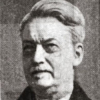
Jacques Maritain
Jacques Maritainwas a French Catholic philosopher. Raised as a Protestant, he became an agnostic before converting to Catholicism in 1906. An author of more than 60 books, he helped to revive St. Thomas Aquinas for modern times, and was influential in the development and drafting of the Universal Declaration of Human Rights. Pope Paul VI presented his "Message to Men of Thought and of Science" at the close of Vatican II to Maritain, his long-time friend and mentor. Maritain's interest...
NationalityFrench
ProfessionPhilosopher
Date of Birth18 November 1882
CountryFrance
Jacques Maritain quotes about
A man of courage flees forward in the midst of new things.
The philosopher says that God's knowledge is the measure of things, and that things are the measure of man's knowledge.
Nothing is more human than for man to desire naturally things impossible to his nature. It is, indeed, the property of a nature which is not closed up in matter like the nature of physical things, but which is intellectual or infinitized by the spirit. It is the property of a metaphysical nature. Such desires reach for the infinite, because the intellect thirsts for being and being is infinite.
It is necessary that the object that the artist is shaping, whether it be a vase of clay or a fishing boat, be significant of something other than itself. This object must be a sign as well as an object; a meaning must animate it, and make it say more than it is.
God's love causes the beauty of what He loves, our love is caused by the beauty of what we love.
Since art is a virtue of the intellect, it demands to communicate with the entire universe of the intellect. Hence it is that the normal climate of art is intelligence and knowledge: its normal soil, the civilized heritage of a consistent and integrated system of beliefs and values; its normal horizon , the infinity of human experience enlighted by the passionate insight of anguish or the intellectual virtues of a contemplative mind.
A single idea, if it is right, saves us the labor of an infinity of experiences.
Since science's competence extends to observable and measurable phenomena, not to the inner being of things, and to the means, not to the ends of human life, it would be nonsense to expect that the progress of science will provide men with a new type of metaphysics, ethics, or religion.
The division between the useful arts and the fine arts must not be understood in too absolute a manner. In the humblest work of the craftsmen, if art is there, there is a concern for beauty, through a kind of indirect repercussion that the requirements of the creativity of the spirit exercise upon the production of an object to serve human needs.
Some truths are seen better through tears.
In point of fact, Western philosophy has never set itself free of Christianity: wherever Christianity did not have a hand in the construction of modern philosophy it served instead as a stumbling block.
The only artist who does not deserve respect is the one who works to please the public, for commercial success or for official success.
If it is correct to say that there will always be rightist temperaments and leftist temperaments, it is nevertheless also correct to say that political philosophy is neither rightist nor leftist; it must simply be true .
Christianity taught men that love is worth more than intelligence.