Jacques Maritain
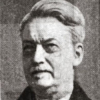
Jacques Maritain
Jacques Maritainwas a French Catholic philosopher. Raised as a Protestant, he became an agnostic before converting to Catholicism in 1906. An author of more than 60 books, he helped to revive St. Thomas Aquinas for modern times, and was influential in the development and drafting of the Universal Declaration of Human Rights. Pope Paul VI presented his "Message to Men of Thought and of Science" at the close of Vatican II to Maritain, his long-time friend and mentor. Maritain's interest...
NationalityFrench
ProfessionPhilosopher
Date of Birth18 November 1882
CountryFrance
Jacques Maritain quotes about
The sole philosophy open to those who doubt the possibility of truth is absolute silence -- even mental.
We don't love qualities; we love a person; sometimes by reason of their defects as well as their qualities.
A great philosopher in the wrong is like a beacon on the reefs which says to seamen: steer clear of me.
The day when efficacy would prevail over truth will never come for the Church, for then the gates of hell would have prevailed against her.
For to love is to give what one is, his very being, in the most absolute, the most brazenly metaphysical, the least phenomenalizable sense of this word.
Western humanism has religious and transcendent sources without which it is incomprehensible to itself.
Things are opaque to us, and we are opaque to ourselves.
In each of us there dwells a mystery, and that mystery is the human personality.
To be free is of the essence of every intellectual being.
The light of common sense is fundamentally the same light as that of science, that is to say, the natural light of the intellect. But in common sense this light does not return upon itself by critical reflection, and is not perfected by what we shall learn to know as a scientific habit.
Americans seem sometimes to believe that if you are a thinker you must be a frowning bore, because thinking is so dam serious.
At each epoch of history the world was in a hopeless state, and at each epoch of history the world muddled through; at each epoch the world was lost, and at each epoch it was saved.
Authority and power are two different things: power is the force by means of which you can oblige others to obey you. Authority is the right to direct and command, to be listened to or obeyed by others. Authority requests power. Power without authority is tyranny.
I don't see America as a mainland, but as a sea, a big ocean. Sometimes a storm arises, a formidable current develops, and it seems it will engulf everything. Wait a moment, another current will appear and bring the first one to naught.