James Madison
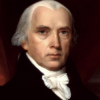
James Madison
James Madison, Jr.was a political theorist, American statesman, and the fourth President of the United States. He is hailed as the "Father of the Constitution" for his pivotal role in drafting and promoting the U.S. Constitution and the Bill of Rights...
NationalityAmerican
ProfessionUS President
Date of Birth16 March 1751
CityPort Conway, VA
CountryUnited States of America
heart government attachment
But the most deplorable effect of all, is that diminution of attachment and reverence, which steals into the hearts of the people, towards a political system which betrays so many marks of infirmity, and disappoints so many of their flattering hopes. No government, any more than an individual, will long be respected, without being truly respectable; nor be truly respectable, without possessing a certain portion of order and stability.
giving people information
Nothing could be more irrational than to give the people power, and to withhold from them information without which power is abused.
teacher government america
If Congress can employ money indefinitely to the general welfare... they may appoint teachers in every state... The powers of Congress would subvert the very foundation, the very nature of the limited government established by the people of America.
gun second-amendment liberty
Americans have the right and advantage of being armed
federalism constitution composition
The proposed Constitution is, in strictness, neither a national nor a federal constitution; but a composition of both.
rights government law
The preservation of a free government requires not merely that the metes and bounds which separate each department of power be invariably maintained; but more especially that neither of them be suffered to overleap the great Barrier which defends the rights of the people. The Rulers who are guilty of such an encroachment, exceed the commission from which they derive their authority and are Tyrants. The people who submit to it are governed by laws made neither by themselves nor by an authority derived from them, and are slaves.
government roots oligarchy
Of all the objections which have been framed against the federal Constitution, this is perhaps the most extraordinary. Whilst the objection itself is levelled against a pretended oligarchy, the principle of it strikes at the very root of republican government.
war chinese balance
What becomes of the surplus of human life? It is either, 1st. destroyed by infanticide, as among the Chinese and Lacedemonians; or 2d. it is stifled or starved, as among other nations whose population is commensurate to its food; or 3d. it is consumed by wars and endemic diseases; or 4th. it overflows, by emigration, to places where a surplus of food is attainable.
lying liberty temples
The temple through which alone lies the road to that of Liberty.
order rights second-amendment
Liberty and order will never be perfectly safe until a trespass on the Constitution provisions for either, shall be felt with the same keenness that resents and invasion of the dearest rights...
government safety second-amendment
An efficient militia is authorized and contemplated by the Constitution and required by the spirit and safety of free government.
government skills different
Experience has instructed us that no skill in the science of government has yet been able to discriminate and define, with sufficient certainty, its three great provinces the legislative, executive, and judiciary; or even the privileges and powers of the different legislative branches.
government degrees doe
Frequent elections are unquestionably the only policy by which this dependence and sympathy can be effectually secured. But what particular degree of frequency may be absolutely necessary for the purpose, does not appear to be susceptible of any precise calculation; and must depend on a variety of circumstances with which it may be connected. Let us consult experience, the guide that ought always to be followed, whenever it can be found.
powerful government adequate
Experience assures us, that the efficacy of the provision has been greatly over-rated; and that some more adequate defense is indispensably necessary for the more feeble, against the more powerful members of the government.