Jaron Lanier
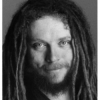
Jaron Lanier
Jaron Zepel Lanieris an American computer philosophy writer, computer scientist, visual artist, and composer of classical music. A pioneer in the field of virtual reality, Lanier and Thomas G. Zimmerman left Atari in 1985 to found VPL Research, Inc., the first company to sell VR goggles and gloves. In the late 1990s, Lanier worked on applications for Internet2, and in the 2000s, he was a visiting scholar at Silicon Graphics and various universities. From 2006 he began to work at...
NationalityAmerican
ProfessionArtist
Date of Birth3 May 1960
CountryUnited States of America
An intelligent person feels guilty for downloading music without paying the musician, but they use this free-open-culture ideology to cover it.
I do real paintings, you know. I'm a little messy in the studio, so I'm a bit of a danger. But I just adore it.
Services like Google and Facebook only exist because of the social acceptance of a mass amount of distributed volunteer labor from tons and tons of people.
There is nothing more gray, stultifying, or dreary than life lived inside the confines of a theory.
The problem I have with socialist utopias is there's some kind of committees trying to soften outcomes for people. I think that imposes models of outcomes for other people's lives. So in a spiritual sense there's some bit of libertarian in me. But the critical thing for me is moderation. And if you let that go far you do end up with a winner-take-all society that ultimately crushes everybody even worse.
The beauty of HTML was that one-way linking made it very simple to spread because you could put something up and take no responsibility whatsoever. And that creates a society in which people display no responsibility whatsoever. That's the problem.
A file-sharing service and a hedge fund are essentially the same things. In both cases, there's this idea that whoever has the biggest computer can analyze everyone else to their advantage and concentrate wealth and power. It's shrinking the overall economy. I think it's the mistake of our age.
The most effective young Facebook users, however -- the ones who will probably be winners if Facebook turns out to be a model of the future they will inhabit as adults -- are the ones who create successful online fictions about themselves.
Siren Servers are narcissists; blind to where value comes from, including the web of global interdependence that is at the core of their own value.
At the turn of the [21st] century it was really Sergey Brin at Google who just had the thought of, well, if we give away all the information services, but we make money from advertising, we can make information free and still have capitalism. But the problem with that is it reneges on the social contract where people still participate in the formal economy. And it's a kind of capitalism that's totally self-defeating because it's so narrow. It's a winner-take-all capitalism that's not sustaining.
The cloud is driven by statistics, and even in the worst individual cases of personal ignorance, dullness, idleness, or irrelevance, every person is constantly feeding data into the cloud these days. The value of such information could be treated as genuine, but it is not. Instead, the blindness of our standards of accounting to all that value is gradually breaking capitalism.
We should treat computers as fancy telephones, whose purpose is to connect people.... As long as we remember that we ourselves are the source of our value, our creativity, our sense of reality, then all of our work with computers will be worthwhile and beautiful.
The great thing about crummy software is the amount of employment it generates.
Digital technologies are setting down the new grooves of how people live, how we do business, how we do everything--and they're doing it according to the expectations of foolish utopian scenarios. We want free online experiences so badly that we are happy to not be paid for information that comes from us now or ever. That sensibility also implies that the more dominant information becomes in our economy, the less most of us will be worth.