John Dewey
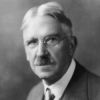
John Dewey
John Deweywas an American philosopher, psychologist, and educational reformer whose ideas have been influential in education and social reform. Dewey is one of the primary figures associated with the philosophy of pragmatism and is considered one of the founders of functional psychology. A Review of General Psychology survey, published in 2002, ranked Dewey as the 93rd most cited psychologist of the 20th century. A well-known public intellectual, he was also a major voice of progressive education and liberalism. Although Dewey...
wish influential moments
Adults are naturally most conscious of directing the conduct of others when they are immediately aiming so to do. As a rule, they have such an aim consciously when they find themselves resisted; when others are doing things they do not wish them to do. But the more permanent and influential modes of control are those which operate from moment to moment continuously without such deliberate intention on our part.
education truth thinking
Mankind likes to think in terms of extreme opposites. It is given to formulating its beliefs in terms of Either/Ors, between which it recognizes no intermediate possibilities.
numbers diversity mind
Experience, in short, is not a combination of mind and world, subject and object, method and subject matter, but is a single continuous interaction of a great diversity (literally countless in number) of energies.
regulation consciousness individual
Education is a regulation of the process of coming to share in the social consciousness; and that the adjustment of individual activity on the basis of this social consciousness is the only sure method of social reconstruction.
firsts connections assuming
Any experience, however, trivial in its first appearance, is capable of assuming an indefinite richness of significance by extending its range of perceived connections.
men past living-alone
A man really living alone (alone mentally as well as physically) would have little or no occasion to reflect upon his past experience to extract its net meaning.
attitude often-is likes-and-dislikes
Collateral learning in the way of formation of enduring attitudes, of likes and dislikes, may be and often is much more important than the spelling lesson or lesson in geography or history that is learned.
moral life-is share
All education which develops power to share effectively in social life is moral.
educational soul action
Insight into soul-action, ability to discriminate the genuine from the sham and capacity to further one and discourage the other.
initiative members adaptability
A society which is mobile, which is full of channels for the distribution of a change occurring anywhere, must see to it that its members are educated to personal initiative and adaptability.
emotional intellectual attention
Even today, in our industrial life, apart from certain values of industriousness and thrift, the intellectual and emotional reaction of the forms of human association under which the world's work is carried on receives little attention as compared with physical output.
views discipline culture
A narrow and moralistic view of morals is responsible for the failure to recognize that all the aims and values which are desirable in education are themselves moral. Discipline, natural development, culture, social efficiency, are moral traits - marks of a person who is a worthy member of that society which it is the business of education to further.
art spring lying
A large part of the art of instruction lies in making the difficulty of new problems large enough to challenge thought, and small enough so that, in addition to the confusion naturally attending the novel elements, there shall be luminous familiar spots from which helpful suggestions may spring.
children philosophy educational
It is difficult to connect general principles with such thoroughly concrete things as children.