John Dewey
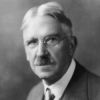
John Dewey
John Deweywas an American philosopher, psychologist, and educational reformer whose ideas have been influential in education and social reform. Dewey is one of the primary figures associated with the philosophy of pragmatism and is considered one of the founders of functional psychology. A Review of General Psychology survey, published in 2002, ranked Dewey as the 93rd most cited psychologist of the 20th century. A well-known public intellectual, he was also a major voice of progressive education and liberalism. Although Dewey...
country educational school
That which distinguishes the Soviet system both from other national systems and from the progressive schools of other countries is the conscious control of every educational procedure by reference to a single and comprehensive social purpose.
growth immaturity negative
The need for growth - what we might call immaturity - is not a negative state of being.
school opportunity office
It is the office of the school environment to balance the various elements in the social environment, and to see to it that each individual gets an opportunity to escape from the limitations of the social group in which he was born, and to come into living contact with a broader environment.
happiness work opportunity
To find out what one is fitted to do, and to secure an opportunity to do it, is the key to happiness.
education teaching thinking
Give the pupils something to do, not something to learn; and the doing is of such a nature as to demand thinking; learning naturally results.
yesterday today way
You cannot teach today the same way you did yesterday to prepare students for tomorrow.
men house commit
A man can be prevented from breaking into other persons' houses by shutting him up, but shutting him up may not alter his disposition to commit burglary.
mistake learning-from-mistakes learning-experience
We do not learn from experience...we learn from reflecting on experience.
affair process active
Education is not an affair of 'telling' and being told, but an active and constructive process.
thinking self phrases
The phrase "think for one's self" is a pleonasm. Unless one does it for one's self, it isn't thinking.
action consequence
To have an idea of a thing is not just to get certain sensations from it. It is to be able to respond to the thing in view of its place in an inclusive scheme of action; it is to foresee the drift and probable consequence of the action of the thing upon us and of our action upon it.
mean understanding common
Understanding one another means that objects, including sounds, have the same value for both with respect to carrying on a common pursuit.
disturbed protest response
A response is not just a re-action, a protest, as it were, against being disturbed; it is, as the word indicates, an answer. It meets the stimulus, and corresponds with it.
communication community progress
The parts of a machine work with a maximum of cooperativeness for a common result, but they do not form a community. If, however, they were all cognizant of the common end and all interested in it so that they regulated their specific activity in view of it, then they would form a community. But this would involve communication. Each would have to know what the other was about and would have to have some way of keeping the other informed as to his own purpose and progress.