John Dewey
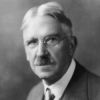
John Dewey
John Deweywas an American philosopher, psychologist, and educational reformer whose ideas have been influential in education and social reform. Dewey is one of the primary figures associated with the philosophy of pragmatism and is considered one of the founders of functional psychology. A Review of General Psychology survey, published in 2002, ranked Dewey as the 93rd most cited psychologist of the 20th century. A well-known public intellectual, he was also a major voice of progressive education and liberalism. Although Dewey...
communication transmission
Society not only continues to exist by transmission, by communication, but it may fairly be said to exist in transmission, in communication.
mean
Etymologically, the word education means just a process of leading or bringing up.
mean propose
When things have a meaning for us, we mean (intend, propose) what we do: when they do not, we act blindly, unconsciously, unintelligently.
butterfly unique earthquakes
But the individual butterfly or earthquake remains just the unique existence which it is. We forget in explaining its occurrence that it is only the occurrence that is explained, not the thing itself.
community political tradition
Inside the modern city, in spite of its nominal political unity, there are probably more communities, more differing customs, traditions, aspirations, and forms of government or control, than existed in an entire continent at an earlier epoch.
mean intelligent matter
Legislation is a matter of more or less intelligent improvisation aiming at palliating conditions by means of patchwork policies.
nature mean desire
Complete adaptation to environment means death. The essential point in all response is the desire to control environment.
mean men democracies-have
The aim of education is to enable individuals to continue their education ... (and) the object and reward of learning is continued capacity for growth. Now this idea cannot be applied to all the members of a society except where intercourse of man with man is mutual, and except where there is adequate provision for the reconstruction of social habits and institutions by means of wide stimulation arising from equitably distributed interests. And this means a democratic society.
believe humanity realizing
If humanity has made some headway in realizing that the ultimate value of every institution is its distinctively human effect - its effect upon conscious experience - we may well believe that this lesson has been learned largely through dealings with the young.
education teacher thinking
The origin of thinking is some perplexity, confusion or doubt.
education teacher thinking
One can think effectively only when one is willing to endure suspense and to undergo the trouble of searching.
country religious children
We are a people of many races, many faiths, creeds, and religions. I do not think that the men who made the Constitution forbade the establishment of a State church because they were opposed to religion. They knew that the introduction of religious differences into American life would undermine the democratic foundations of this country. What holds for adults holds even more for children, sensitive and conscious of differences. I certainly hope that the Board of Education will think very, very seriously before it introduces this division and antagonism in our public schools.
children teaching emotional
In undeveloped social groups, we find very little formal teaching and training. Savage groups mainly rely for instilling needed dispositions into the young upon the same sort of association which keeps adults loyal to their group. They have no special devices, material, or institutions for teaching save in connection with initiation ceremonies by which the youth are inducted into full social membership. For the most part, they depend upon children learning the customs of the adults, acquiring their emotional set and stock of ideas, by sharing in what the elders are doing.
education teaching order
Experiences in order to be educative must lead out into an expanding world of subject matter, a subject matter of facts or information and of ideas. This condition is satisfied only as the educator views teaching and learning as a continuous process of reconstruction of experience.