John Kenneth Galbraith
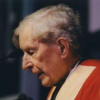
John Kenneth Galbraith
John Kenneth "Ken" Galbraith, OCwas a Canadianeconomist, public official, and diplomat, and a leading proponent of 20th-century American liberalism. His books on economic topics were bestsellers from the 1950s through the 2000s, during which time Galbraith fulfilled the role of public intellectual. As an economist, he leaned toward Post-Keynesian economics from an institutionalist perspective...
NationalityAmerican
ProfessionEconomist
Date of Birth15 October 1908
CountryUnited States of America
John Kenneth Galbraith quotes about
Poverty" Pitt exclaimed "is no disgrace but it is damned annoying." In the contemporary United States it is not annoying but it is a disgrace.
The happiest time of anyone's life is just after the first divorce.
I've been a faithful reader of the great classical documents of economics, or tried to be. The first book in the field that I ever read was Principles of Economics by Alfred Marshall. I suppose subsequently I would have to pick out Keynes, Adam Smith, Marx.
It is not necessary to advertise food to hungry people, fuel to cold people, or houses to the homeless.
People of privilege will always risk their complete destruction rather than surrender any material part of their advantage.
It is a commonplace of modern technology that problems have solutions before there is knowledge of how they are to be solved.
The years of the Great Depression were a superb time for economists because people not knowing what could be done or what should be done would always assume that maybe an economist had the answer. If you were just a lawyer in Washington, you were nobody. But if you were an economist, you might have the answer.
Total physical and mental inertia are highly agreeable, much more so than we allow ourselves to imagine. A beach not only permits such inertia but enforces it, thus neatly eliminating all problems of guilt. It is now the only place in our overly active world that does.
Power is not something that can be assumed or discarded at will like underwear.
All of the great leaders have had one characteristic in common: it was the willingness to confront unequivocally the major anxiety of their people in their time. This, and not much else, is the essence of leadership.
From the spring of 1941, I controlled all prices in the United States. You could lower a price without my permission, but you couldn't raise a price without my permission or that of my staff.
A person buying ordinary products in a supermarket is in touch with his deepest emotions.
Mr. David Stockman has said that supply-side economics was merely a cover for the trickle-down approach to economic policy—what an older and less elegant generation called the horse-and-sparrow theory: If you feed the horse enough oats, some will pass through to the road for the sparrows.
Change comes not from men and women changing their minds, but from the change from one generation to the next.