John Kenneth Galbraith
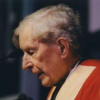
John Kenneth Galbraith
John Kenneth "Ken" Galbraith, OCwas a Canadianeconomist, public official, and diplomat, and a leading proponent of 20th-century American liberalism. His books on economic topics were bestsellers from the 1950s through the 2000s, during which time Galbraith fulfilled the role of public intellectual. As an economist, he leaned toward Post-Keynesian economics from an institutionalist perspective...
NationalityAmerican
ProfessionEconomist
Date of Birth15 October 1908
CountryUnited States of America
John Kenneth Galbraith quotes about
We talk of the enormous virtues of work, but it turns out that that is mostly for the poor. If you're rich enough or if you're a college professor, the virtue lies in leisure and the use you make of your leisure time.
To see economic policy as a problem of choice between rival ideologies is the greatest error of our time.
In economics, the majority is always wrong.
One must always have in mind one simple fact - there is no literate population in the world that is poor, and there is no illiterate population that is anything but poor.
Politics is the art of choosing between the disastrous and the unpalatable.
The only function of economic forecasting is to make astrology look respectable.
All successful revolutions are the kicking in of a rotten door.
The conspicuously wealthy turn up urging the character building values of the privation of the poor.
The conventional view serves to protect us from the painful job of thinking.
The inborn instability of capitalism has been part of the history of the system for several hundred years.
It is almost as important to know what is not serious as to know what is.
No solution [to the problem of poverty] is so effective as providing income to the poor. Whether in the form of food, housing, health services, education or money, income is an excellent antidote for deprivation. No truth has spawned so much ingenious evasion.
The salary of the chief executive of a large corporation is not a market award for achievement. It is frequently in the nature of a warm personal gesture by the individual to himself.
The problem of the modern economy is not a failure of a knowledge of economics; it's a failure of a knowledge of history.