John Locke
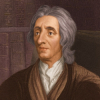
John Locke
John Locke FRSwas an English philosopher and physician, widely regarded as one of the most influential of Enlightenment thinkers and commonly known as the "Father of Liberalism". Considered one of the first of the British empiricists, following the tradition of Sir Francis Bacon, he is equally important to social contract theory. His work greatly affected the development of epistemology and political philosophy. His writings influenced Voltaire and Rousseau, many Scottish Enlightenment thinkers, as well as the American revolutionaries. His contributions...
NationalityEnglish
ProfessionPhilosopher
Date of Birth29 August 1632
Reading furnishes the mind only with materials of knowledge; it is thinking that makes what we read ours.
The most precious of all possessions is power over ourselves.
Any single man must judge for himself whether circumstances warrant obedience or resistance to the commands of the civil magistrate; we are all qualified, entitled, and morally obliged to evaluate the conduct of our rulers. This political judgment, moreover, is not simply or primarily a right, but like self-preservation, a duty to God. As such it is a judgment that men cannot part with according to the God of Nature. It is the first and foremost of our inalienable rights without which we can preserve no other.
There is frequently more to be learned from the unexpected questions of a child than the discourses of men.
Curiosity in children, is but an appetite for knowledge. The great reason why children abandon themselves wholly to silly pursuits and trifle away their time insipidly is, because they find their curiosity balked, and their inquiries neglected.
If any one shall claim a power to lay and levy taxes on the people by his own authority and without such consent of the people, he thereby invades the fundamental law of property, and subverts the end of government.
Wherever Law ends, Tyranny begins.
What worries you, masters you.
Our incomes are like our shoes; if too small, they gall and pinch us; but if too large, they cause us to stumble and to trip.
The great question (about power) is who should have it
Nobody is going to let anybody's children play on something that is unsafe. There is just no way.
As usurpation is the exercise of power which another has a right to, so tyranny is the exercise of power beyond right, which nobody can have a right to.
Till a man can judge whether they be truths or not, his understanding is but little improved, and thus men of much reading, though greatly learned, but may be little knowing.
[I]t being reasonable and just, I should have a right to destroy that which threatens me with destruction: for by the fundamental law of nature, man being to be preserved as much as possible, when all cannot be preserved, the safety of the innocent is to be preferred: and one may destroy a man who makes war upon him, or has discovered an enmity to his being, for the same reason that he may kill a Wolf or a lion....