John Locke
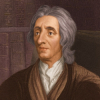
John Locke
John Locke FRSwas an English philosopher and physician, widely regarded as one of the most influential of Enlightenment thinkers and commonly known as the "Father of Liberalism". Considered one of the first of the British empiricists, following the tradition of Sir Francis Bacon, he is equally important to social contract theory. His work greatly affected the development of epistemology and political philosophy. His writings influenced Voltaire and Rousseau, many Scottish Enlightenment thinkers, as well as the American revolutionaries. His contributions...
NationalityEnglish
ProfessionPhilosopher
Date of Birth29 August 1632
This is that which I think great readers are apt to be mistaken in; those who have read of everything, are thought to understand everything too; but it is not always so. Reading furnishes the mind only with materials of knowledge; it is thinking that makes what we read ours. We are of the ruminating kind , and it is not enough to cram ourselves with a great load of collections:;; unless we chew them over again, they will not give us strength and nourishment.
Nobody is made anything by hearing of rules, or laying them up in his memory; practice must settle the habit of doing, without reflecting on the rule; and you may as well hope to make a good painter, or musician, extempore, by a lecture and instruction in the arts of music and painting, as a coherent thinker, or a strict reasoner, by a set of rules, showing him wherein right reasoning consists.
No man's knowledge here can go beyond experience. (An Essay concerning Human Understanding.)
If to break loose from the bounds of reason, and to want that restraint of examination and judgment which keeps us from choosing or doing the worst, be liberty, true liberty, madmen and fools are the only freemen: but yet, I think, nobody would choose to be mad for the sake of such liberty, but he that is mad already.
It is ambition enough to be employed as an under-labourer in clearing the ground a little, and removing some of the rubbish that lies in the way to knowledge.
The great art to learn much is to undertake a little at a time.
All the entertainment and talk of history is nothing almost but fighting and killing: and the honour and renown that is bestowed on conquerors (who for the most part are but the great butchers of mankind) farther mislead growing youth, who by this means come to think slaughter the laudable business of mankind, and the most heroic of virtues.
The Commonwealth of Learning is not at this time without Master-Builders, whose mighty Designs, in advancing the Sciences, will leave lasting Monuments to the Admiration of Posterity; But every one must not hope to be a Boyle, or a Sydenham; and in an Age that produces such Masters, as the Great-Huygenius, and the incomparable Mr. Newton, with some other of that Strain; 'tis Ambition enough to be employed as an Under-Labourer in clearing Ground a little, and removing some of the Rubbish, that lies in the way to Knowledge.
That which is static and repetitive is boring. That which is dynamic and random is confusing. In between lies art.
It is vain to find fault with those arts of deceiving wherein men find pleasure to be deceived.
The chief art of learning is to attempt but a little at a time.
Understanding like the eye; whilst it makes us see and perceive all things, takes no notice of itself; and it requires art and pains to set it at a distance and make it its own subject.
Memory is the power to revive again in our minds those ideas which after imprinting have disappeared, or have been laid aside out of sight.