John Locke
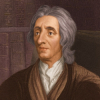
John Locke
John Locke FRSwas an English philosopher and physician, widely regarded as one of the most influential of Enlightenment thinkers and commonly known as the "Father of Liberalism". Considered one of the first of the British empiricists, following the tradition of Sir Francis Bacon, he is equally important to social contract theory. His work greatly affected the development of epistemology and political philosophy. His writings influenced Voltaire and Rousseau, many Scottish Enlightenment thinkers, as well as the American revolutionaries. His contributions...
NationalityEnglish
ProfessionPhilosopher
Date of Birth29 August 1632
I do not say this, that I think there should be no difference of opinions in conversation, nor opposition in men's discourses... 'Tis not the owning one's dissent from another, that I speak against, but the manner of doing it.
Faith is the assent to any proposition not made out by the deduction of reason but upon the credit of the proposer.
To give a man full knowledge of morality, I would send him to no other book than the New Testament.
There are two sides, two players. One is light, the other is dark.
With books we stand on the shoulders of giants.
When we know our own strength, we shall the better know what to undertake with hopes of success...
Don't let the things you don't have prevent you from using what you do have.
That which parents should take care of... is to distinguish between the wants of fancy, and those of nature.
And thus the community perpetually retains a supreme power of saving themselves from the attempts and designs of anybody, even of their legislators, whenever they shall be so foolish, or so wicked, as to lay and carry on designs against the liberties and properties of the subject.
Books seem to me to be pestilent things, and infect all that trade in them...with something very perverse and brutal. Printers, binders, sellers, and others that make a trade and gain out of them have universally so odd a turn and corruption of mind that they have a way of dealing peculiar to themselves, and not conformed to the good of society and that general fairness which cements mankind.
How much education may reconcile young people to pain and sufference, the examples of Sparta do sufficiently shew; and they who have once brought themselves not to think bodily pain the greatest of evils, or that which they ought to stand most in fear of, have made no small advance toward virtue.
This is to think, that men are so foolish, that they take care to avoid what mischiefs may be done them by pole-cats, or foxes; but are content, nay, think it safety, to be devoured by lions.
He that would seriously set upon the search of truth, ought in the first place to prepare his mind with a love of it. For he that loves it not, will not take much pains to get it; nor be much concerned when he misses it.
This is my destiny — I'm supposed to do this, dammit! Don't tell me what I can and can't do!