John Locke
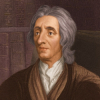
John Locke
John Locke FRSwas an English philosopher and physician, widely regarded as one of the most influential of Enlightenment thinkers and commonly known as the "Father of Liberalism". Considered one of the first of the British empiricists, following the tradition of Sir Francis Bacon, he is equally important to social contract theory. His work greatly affected the development of epistemology and political philosophy. His writings influenced Voltaire and Rousseau, many Scottish Enlightenment thinkers, as well as the American revolutionaries. His contributions...
NationalityEnglish
ProfessionPhilosopher
Date of Birth29 August 1632
'Tis true that governments cannot be supported without great charge, and it is fit everyone who enjoys a share of protection should pay out of his estate his proportion of the maintenance of it.
In my opinion, understanding who your target audience is, and what they want, and writing to them (and only them!) is the most important component of being successful as an author.
Mathematical proofs, like diamonds, are hard and clear, and will be touched with nothing but strict reasoning.
Struggle is nature's way of strengthening it
How then shall they have the play-games you allow them, if none must be bought for them?" I answer, they should make them themselves, or at least endeavour it, and set themselves about it. ...And if you help them where they are at a stand, it will more endear you to them than any chargeable toys that you shall buy for them.
The care of souls cannot belong to the civil magistrate.
Thirdly, the supreme power cannot take from any man any part of his property without his own consent: for the preservation of property being the end of government, and that for which men enter into society, it necessarily supposes and requires, that the people should have property, without which they must be supposed to lose that, by entering into society, which was the end for which they entered into it; too gross an absurdity for any man to own.
Though the water running in the fountain be every ones, yet who can doubt, but that in the pitcher is his only who drew it out?
Thus the law of nature stands as an eternal rule to all men, legislators as well as others. The rules that they make for other mens actions, must, as well as their own and other mens actions, be conformable to the law of nature, i.e. to the will of God, of which that is a declaration, and the fundamental law of nature being the preservation of mankind, no human sanction can be good, or valid against it.
Now, I appeal to the consciences of those that persecute, torment, destroy, and kill other men upon pretence of religion, whether they do it out of friendship and kindness towards them or no? I say, if all this be done merely to make men Christians and procure their salvation, why then do they suffer whoredom, fraud, malice and such-like enormities, which (according to the Apostle) manifestly relish of heathenish corruption, to predominate so much and abound amongst their flocks and people?
Revelation in matters where reason cannot judge, or but probably, ought to be hearkened to. First, Whatever proposition is revealed, of whose truth our mind, by its natural faculties and notions, cannot judge, that is purely matter of faith, and above reason.
There are a thousand ways to Wealth, but only one way to Heaven.
Curiosity in children ... is but an appetite after knowledge and therefore ought to be encouraged in them, not only as a good sign, but as the great instrument nature has provided to remove that ignorance they were born with and which, without this busy inquisitiveness, will make them dull and useless creatures.
The greatest part of mankind ... are given up to labor, and enslaved to the necessity of their mean condition; whose lives are worn out only in the provisions for living.