John Maynard Keynes
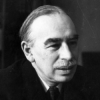
John Maynard Keynes
John Maynard Keynes, 1st Baron Keynes, CB, FBA, was an English economist whose ideas fundamentally changed the theory and practice of macroeconomics and the economic policies of governments. He built on and greatly refined earlier work on the causes of business cycles, and is widely considered to be one of the most influential economists of the 20th century and the founder of modern macroeconomics. His ideas are the basis for the school of thought known as Keynesian economics and its...
NationalityEnglish
ProfessionEconomist
Date of Birth5 June 1883
Thus, the weight of my criticism is directed against the inadequacy of the theoretical foundations of the laissez-faire doctrine upon which I was brought up and for many years I taught
But my lord, when we addressed this issue a few years ago, didn't you argue the other side?" He said, "That's true, but when I get more evidence I sometimes change my mind. What do you do?
For at least another hundred years we must pretend to ourselves and to every one that fair is foul and foul is fair; for foul is useful and fair is not. Avarice and usury and precaution must be our gods for a little longer still.
To suggest social action for the public good to the city London is like discussing The Origin of Species to a Bishop sixty years ago.
Newton was not the first of the age of reason. He was the last of the magicians, the last of the Babylonians and Sumerians, the last great mind that looked out on the visible and intellectual world with the same eyes as those who began to build our intellectual inheritance rather less than 10,000 years ago.
I find myself more and more relying for a solution of our problems on the invisible hand which I tried to eject from economic thinking twenty years ago.
When the accumulation of wealth is no longer of high social importance, there will be great changes in the code of morals. We shall be able to rid ourselves of many of the pseudo-moral principles which have hag-ridden us for two hundred years, by which we have exulted some of the most distasteful of human qualities into the highest virtues.
Regarded as a means, (the businessman) is tolerable; as an end, he is not so satisfactory
It is better to be roughly right than precisely wrong.
There is no harm in being sometimes wrong- especially if one is promptly found out.
If I owe you a pound, I have a problem; but if I owe you a million, the problem is yours.
The difficulty lies, not in the new ideas, but in escaping from the old ones, which ramify, for those brought up as most of us have been, into every corner of our minds.
I feel no shame at being found still owning a share when the bottom of the market comes…I would go much further than that. I should say that it is from time to time the duty of a serious investor to accept the depreciation of his holdings with equanimity and without reproaching himself. … An investor…should be aiming primarily at long-period results, and should be solely judged by these.
It is a mistake to think that one limits one’s risk by spreading too much between enterprises about which one knows little and has no reason for special confidence.