John Maynard Keynes
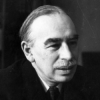
John Maynard Keynes
John Maynard Keynes, 1st Baron Keynes, CB, FBA, was an English economist whose ideas fundamentally changed the theory and practice of macroeconomics and the economic policies of governments. He built on and greatly refined earlier work on the causes of business cycles, and is widely considered to be one of the most influential economists of the 20th century and the founder of modern macroeconomics. His ideas are the basis for the school of thought known as Keynesian economics and its...
NationalityEnglish
ProfessionEconomist
Date of Birth5 June 1883
The difficulty lies not so much in developing new ideas as in escaping from old ones.
When the accumulation of wealth is no longer of high social importance, there will be great changes in the code of morals. We shall be able to rid ourselves of many of the pseudo-moral principles which have hag-ridden us for two hundred years, by which we have exulted some of the most distasteful of human qualities into the highest virtues.
By a continuing process of inflation, government can confiscate, secretly and unobserved, an important part of the wealth of their citizens.
For at least another hundred years we must preÂtend to ourselves and to every one that fair is foul and foul is fair; for foul is useful and fair is not. Avarice and usury and precaution must be our gods for a little longer still.
If the Treasury were to fill old bottles with bank-notes, bury them at suitable depths in disused coal-mines which are then filled up to the surface with town rubbish, and leave it to private enterprise on well-tried principles of laissez-faire to dig the notes up again (the right to do so being obtained, of course, by tendering for leases of the note-bearing territory), there need be no more unemployment and, with the help of repercussions, the real income of the community, and its capital wealth, would probably become a good deal greater than it actually is.
The best way to destroy the capitalist system is to debauch the currency. By a continuing process of inflation, governments can confiscate, secretly and unobserved, an important part of the wealth of their citizens.
The Class war will find me on the side of the educated bourgeoisie.
Investment based on genuine long-term expectations is so difficult today as to be scarcely practicable.