John Maynard Keynes
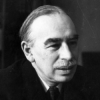
John Maynard Keynes
John Maynard Keynes, 1st Baron Keynes, CB, FBA, was an English economist whose ideas fundamentally changed the theory and practice of macroeconomics and the economic policies of governments. He built on and greatly refined earlier work on the causes of business cycles, and is widely considered to be one of the most influential economists of the 20th century and the founder of modern macroeconomics. His ideas are the basis for the school of thought known as Keynesian economics and its...
NationalityEnglish
ProfessionEconomist
Date of Birth5 June 1883
There is no intrinsic reason for the scarcity of capital.
It economics is a method rather than a doctrine, an apparatus of the mind, a technique of thinking which helps its possessor to draw correct conclusions.
The important thing for Government is not to do things which individuals are doing already, and to do them a little better or a little worse; but to do those things which at present are not done at all.
A conventional valuation which is established as the outcome of the mass psychology of a large number of ignorant individuals is liable to change violently as the result of a sudden fluctuation of opinion due to factors which do not really make much difference to the prospective yield; since there will be no strong roots of conviction to hold it steady.
The expected never happens; it is the unexpected always.
The importance of money flows from it being a link between the present and the future.
Too large a proportion of recent "mathematical" economics are mere concoctions, as imprecise as the initial assumptions they rest on, which allow the author to lose sight of the complexities and interdependencies of the real world in a maze of pretentious and unhelpful symbols.
In the long run we are all dead.
Professional investment may be likened to those newspaper competitions in which the competitors have to pick out the six prettiest faces from a hundred photographs, the prize being awarded to the competitor whose choice most nearly corresponds to the average preferences of the competitors as a whole.
Those, who are strongly wedded to what I shall call 'the classical theory', will fluctuate, I expect, between a belief that I am quite wrong and a belief that I am saying nothing new. It is for others to determine if either of these or the third alternative is right.
Ideas shape the course of history.
The political problem of mankind is to combine three things: economic efficiency, social justice and individual liberty.
Investing is an activity of forecasting the yield over the life of the asset; speculation is the activity of forecasting the psychology of the market.
The day is not far off when the economic problem will take the back seat where it belongs, and the arena of the heart and the head will be occupied or reoccupied, by our real problems - the problems of life and of human relations, of creation and behavior and religion.