John Maynard Keynes
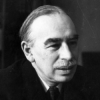
John Maynard Keynes
John Maynard Keynes, 1st Baron Keynes, CB, FBA, was an English economist whose ideas fundamentally changed the theory and practice of macroeconomics and the economic policies of governments. He built on and greatly refined earlier work on the causes of business cycles, and is widely considered to be one of the most influential economists of the 20th century and the founder of modern macroeconomics. His ideas are the basis for the school of thought known as Keynesian economics and its...
NationalityEnglish
ProfessionEconomist
Date of Birth5 June 1883
If, however, a government refrains from regulations and allows matters to take their course, essential commodities soon attain a level of price out of the reach of all but the rich, the worthlessness of the money becomes apparent, and the fraud upon the public can be concealed no longer.
Long run is a misleading guide to current affairs. In the long run we are all dead.
Businessmen have a different set of delusions from politicians; and need, therefore, different handling. They are, however, much milder than politicians, at the same time allured and terrified by the glare of publicity....You could do anything you like with them, if you would treat them (even the big ones) not as wolves and tigers, but as domestic animals by nature, even though they have been badly brought up and not trained as you would wish.
All production is for the purpose of ultimately satisfying a consumer.
When the facts change, I change my mind.
It's not bringing in the new ideas that's so hard; it's getting rid of the old ones.
When I find new information I change my mind; What do you do?
Practical men who believe themselves to be quite exempt from any intellectual influence, are usually the slaves of some defunct economist. Madmen in authority, who hear voices in the air, are distilling their frenzy from some academic scribbler of a few years back
The outstanding faults of the economic society in which we live are its failure to provide for full employment and its arbitrary and inequitable distribution of wealth and incomes.
Well, when I get new information, I rethink my position. What, sir, do you do with new information?
The biggest problem is not to let people accept new ideas, but to let them forget the old ones.
If farming were to be organised like the stock market, a farmer would sell his farm in the morning when it was raining, only to buy it back in the afternoon when the sun came out.
Capitalism is the extraordinary belief that the nastiest of men, for the nastiest of reasons, will somehow work for the benefit of us all.
The love of money as a possession-as distinguished from the love of money as a means to the enjoyments and realities of life-will be recognized for what it is, a somewhat disgusting morbidity, one of those semi-criminal, semi-pathological propensities which one hands over with a shudder to the specialists in mental disease