John Stuart Mill
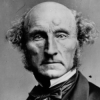
John Stuart Mill
John Stuart Millwas an English philosopher, political economist, feminist, and civil servant. One of the most influential thinkers in the history of liberalism, he contributed widely to social theory, political theory and political economy. He has been called "the most influential English-speaking philosopher of the nineteenth century." Mill's conception of liberty justified the freedom of the individual in opposition to unlimited state control...
NationalityEnglish
ProfessionPhilosopher
Date of Birth20 May 1806
philosophical perfection done
To do as one would be done by, and to love one's neighbour as oneself, constitute the ideal perfection of utilitarian morality
christian believe government
The United States is no more a Christian nation because most of its citizens are Christians than it is a 'white' nation because most of its citizens are white. We are Americans because we practice democracy and believe in republican government, not because we practice revealed religion and believe in Bible-based government.
feminism important zeal
The most important thing women have to do is to stir up the zeal of women themselves.
silence assumption absolute-certainty
All silencing of discussion is an assumption of infallibility.
police humanity liberty
And it is not difficult to show, by abundant instances, that to extend the bounds of what may be called moral police, until it encroaches on the most unquestionably legitimate liberty of the individual, is one of the most universal of all human propensities.
science names progress
The application of algebra to geometry ... has immortalized the name of Descartes, and constitutes the greatest single step ever made in the progress of the exact sciences.
science men thinking
The study of science teaches young men to think, while study of the classics teaches them to express thought.
truth danger whole
... the besetting danger is not so much of embracing falsehood for truth, as of mistaking a part of the truth for the whole.
truth feelings littles
Even if the received opinion be not only true, but the whole truth; unless it is suffered to be, and actually is, vigorously and earnestly contested, it will, by most of those who receive it, be held in the manner of a prejudice, with little comprehension or feeling of its rational grounds
truth character law
The laws and conditions of the production of wealth partake of the character of physical truths. There is nothing optional or arbitrary in them ... It is not so with the Distribution of Wealth. That is a matter of human institution solely. The things once there, mankind, individually or collectively, can do with them as they like.
truth two intuition
Truths are known to us in two ways: some are known directly, and of themselves; some through the medium of other truths. The former are the subject of Intuition, or Consciousness; the latter, of Inference; the latter of Inference. The truths known by Intuition are the original premisses, from which all others are inferred.
nature law political
Whether moral and social phenomena are really exceptions to the general certainty and uniformity of the course of nature; and how far the methods, by which so many of the laws of the physical world have been numbered among truths irrevocably acquired and universally assented to, can be made instrumental to the gradual formation of a similar body of received doctrine in moral and political science.
real character doctrine
... what is really inspiriting and ennobling in the doctrine of freewill, is the conviction that we have real power over the formation of our own character; that our will, by influencing some of our circumstances, can modify our future habits or capabilities of willing.
may chance economics
Human beings are no longer born to their place in life...but are free to employ their faculties and such favorable chances as offer, to achieve the lot which may appear to them as desirable.