John Stuart Mill
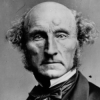
John Stuart Mill
John Stuart Millwas an English philosopher, political economist, feminist, and civil servant. One of the most influential thinkers in the history of liberalism, he contributed widely to social theory, political theory and political economy. He has been called "the most influential English-speaking philosopher of the nineteenth century." Mill's conception of liberty justified the freedom of the individual in opposition to unlimited state control...
NationalityEnglish
ProfessionPhilosopher
Date of Birth20 May 1806
religious understanding intellectual
If religious belief be indeed so necessary to mankind, as we are continually assured that it is, there is great reason to lament, that the intellectual grounds of it should require to be backed by moral bribery or subornation of the understanding.
religious atheism natural
So natural to mankind is intolerance ... that religious freedom has hardly anywhere been practically realized.
government roots people
In a really equal democracy, every or any section would be represented, not disproportionately, but proportionately. ... Unless they are, there is not equal government, but a government of inequality and privilege: one part of the people rule over the rest: there is a part whose fair and equal share of influence in the representation is withheld from them, contrary to all just government, but, above all, contrary to the principle of democracy, which professes equality as its very root and foundation.
psychological difficulty impossibility
A [psychological] difficulty is not an impossibility.
character thinking fearless
A state of things in which a large portion of the most active and inquiring intellects find it advisable to keep the genuine principles and grounds of their convictions within their own breasts, and attempt, in what they address to the public, to fit as much as they can of their own conclusions to premises which they have internally renounced, cannot send forth the open, fearless characters, and logical, consistent intellects who once adorned the thinking world.
inference process known
Induction is a process of inference; it proceeds from the known to the unknown.
country greatness mind
How can great minds be produced in a country where the test of great minds is agreeing in the opinion of small minds?
religious tolerance religion
The great writers to whom the world owes what religious liberty it possesses, have mostly asserted freedom of conscience as an indefeasible right, and denied absolutely that a human being is accountable to others for his religious belief. Yet so natural to mankind is intolerance in whatever they really care about, that religious freedom has hardly anywhere been practically realised, except where religious indifference, which dislikes to have its peace disturbed by theological quarrels, has added its weight to the scale.
men freedom-of-speech strange
Strange it is that men should admit the validity of the arguments for free speech but object to their being "pushed to an extreme", not seeing that unless the reasons are good for an extreme case, they are not good for any case.
progress culture population
A stationary condition of capital and population implies no stationary state of human improvement. There could be as much scope as ever for all kinds of mental culture, and moral and social progress.
law cases accounts
If the universe had a beginning, its beginning, by the very condition of the cases, was supernatural; the laws of Nature cannot account for their own origin.
philosophy past might
It might be plausibly maintained, that in almost every one of the leading controversies, past or present, in social philosophy, both sides were in the right in what they affirmed, though wrong in what they denied.
mean purpose way
Since reasoning , or inference, the principal subject of logic, is an operation which usually takes place by means of words , and in complicated cases can take place in no other way: those who have not a thorough insight into both the signification and purpose of words, will be under chances, amounting almost to certainty, of reasoning or inferring incorrectly.
selfish intelligent animal
Few human creatures would consent to be changed into any of the lower animals for a promise of the fullest allowance of a beast's pleasures; no intelligent human being would consent to be a fool, no instructed person would be an ignoramus, no person of feeling and conscience would be selfish and base, even though they should be persuaded that the fool, the dunce, or the rascal is better satisfied with his lot than they are with theirs.