Joseph Rotblat
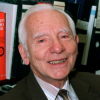
Joseph Rotblat
Sir JosephRotblat KCMG CBE FRSwas a Polish physicist, a self-described "Pole with a British passport". Rotblat was the only physicist to leave the Manhattan Projecton the grounds of conscience. Rotblat's work on nuclear fallout was a major contribution toward the ratification of the 1963 Partial Nuclear Test Ban Treaty. A signatory of the Russell–Einstein Manifesto, he was secretary-general of the Pugwash Conferences on Science and World Affairs from their founding until 1973. He shared, with the Pugwash Conferences, the 1995...
NationalityPolish
ProfessionPhysicist
Date of Birth4 November 1908
CountryPoland
Long before the terrifying potential of the arms race was recognized, there was a widespread instinctive abhorrence of nuclear weapons, and a strong desire to get rid of them.
The present basic philosophy is nuclear deterrence.
I appeal to my fellow scientists to remember their responsibility to humanity.
The decision to use the atom bomb on Japanese cities, and the consequent buildup of enormous nuclear arsenals, was made by governments, on the basis of political and military perceptions.
Indeed, the whole human species is endangered, by nuclear weapons or by other means of wholesale destruction which further advances in science are likely to produce.
But the first the general public learned about the discovery was the news of the destruction of Hiroshima by the atom bomb. A splendid achievement of science and technology had turned malign. Science became identified with death and destruction.
Alice Stewart [is] a much underestimated scientist who has been an indomitable challenger of the establishment and a thorn in the flesh of the nuclear industry.
So I ask the nuclear powers to abandon the out-of-date thinking of the Cold War period and take a fresh look. Above all, I appeal to them to bear in mind the long-term threat that nuclear weapons pose to humankind and to begin action towards their elimination.
I saw science as being in harmony with humanity.
I did not imagine that the second half of my life would be spent on efforts to avert a mortal danger to humanity created by science.
But scientists on both sides of the iron curtain played a very significant role in maintaining the momentum of the nuclear arms race throughout the four decades of the Cold War.
From my earliest days I had a passion for science.
When the START 2 treaty has been implemented - and remember it has not yet been ratified - we will be left with some 15,000 nuclear warheads, active and in reserve. Fifteen thousand weapons with an average yield of 20 Hiroshima bombs.
My short-term vision is the abolition of nuclear weapons. My long-term vision is the abolition of war.