Joseph Rotblat
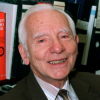
Joseph Rotblat
Sir JosephRotblat KCMG CBE FRSwas a Polish physicist, a self-described "Pole with a British passport". Rotblat was the only physicist to leave the Manhattan Projecton the grounds of conscience. Rotblat's work on nuclear fallout was a major contribution toward the ratification of the 1963 Partial Nuclear Test Ban Treaty. A signatory of the Russell–Einstein Manifesto, he was secretary-general of the Pugwash Conferences on Science and World Affairs from their founding until 1973. He shared, with the Pugwash Conferences, the 1995...
NationalityPolish
ProfessionPhysicist
Date of Birth4 November 1908
CountryPoland
All nuclear weapon states should now recognize that this is so, and declare - in Treaty form - that they will never be the first to use nuclear weapons. This would open the way to the gradual, mutual reduction of nuclear arsenals, down to zero.
But the nuclear powers still cling tenaciously to their weapons.
The cold war is over, but cold war thinking survives.
My worry is that other advances in science may result in other means of mass destruction, maybe more readily available even than nuclear weapons. Genetic engineering is quite a possible area, because of these dreadful developments that are taking place there.
Above all remember your humanity.
My third appeal is to my fellow citizens in all countries: Help us to establish lasting peace in the world.
This is the reality of nuclear weapons: they may trigger a world war; a war which, unlike previous ones, destroys all of civilization.
I have to bring to your notice a terrifying reality: with the development of nuclear weapons Man has acquired, for the first time in history, the technical means to destroy the whole of civilization in a single act.
Whatever system of governance is eventually adopted, it is important that it carries the people with it. We need to convey the message that safeguarding our common property, humankind, will require developing in each of us a new loyalty: a loyalty to mankind. It calls for the nurturing of a feeling of belonging to the human race. We have to become world citizens.
Technology is driving us together. In many ways we are becoming like one family. With the global threats resulting from science and technology, the whole of humankind now needs protection. We have to extend our loyalty to the whole of the human race.
The chief task was to stop the arms race before it brought utter disaster. However, after the collapse of communism and the disintegration of the Soviet Union, any rationale for having nuclear weapons disappeared.
The most terrifying moment in my life was October 1962, during the Cuban Missile Crisis. I did not know all the facts - we have learned only recently how close we were to war - but I knew enough to make me tremble.
The quest for a war-free world has a basic purpose: survival. But if in the process we learn how to achieve it by love rather than by fear, by kindness rather than by compulsion; if in the process we learn to combine the essential with the enjoyable, the expedient with the benevolent, the practical with the beautiful, this will be an extra incentive to embark on this great task.
Indeed, the very first resolution of the General Assembly of the United Nations - adopted unanimously - called for the elimination of nuclear weapons.