Joseph Rotblat
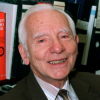
Joseph Rotblat
Sir JosephRotblat KCMG CBE FRSwas a Polish physicist, a self-described "Pole with a British passport". Rotblat was the only physicist to leave the Manhattan Projecton the grounds of conscience. Rotblat's work on nuclear fallout was a major contribution toward the ratification of the 1963 Partial Nuclear Test Ban Treaty. A signatory of the Russell–Einstein Manifesto, he was secretary-general of the Pugwash Conferences on Science and World Affairs from their founding until 1973. He shared, with the Pugwash Conferences, the 1995...
NationalityPolish
ProfessionPhysicist
Date of Birth4 November 1908
CountryPoland
If the militarily most powerful - and least threatened - states need nuclear weapons for their security, how can one deny such security to countries that are truly insecure? The present nuclear policy is a recipe for proliferation. It is a policy for disaster.
But the nuclear powers still cling tenaciously to their weapons.
Indeed, the very first resolution of the General Assembly of the United Nations - adopted unanimously - called for the elimination of nuclear weapons.
Indeed, the whole human species is endangered, by nuclear weapons or by other means of wholesale destruction which further advances in science are likely to produce.
Then, we were told that a world war was prevented by the existence of nuclear weapons. Now, we are told that nuclear weapons prevent all kinds of war.
We are told that the possession of nuclear weapons - in some cases even the testing of these weapons - is essential for national security. But this argument can be made by other countries as well.
Unless there is a change in the basic philosophy, we will not see a reduction of nuclear arsenals to zero for a very long time, if ever.
There is no direct evidence that nuclear weapons prevented a world war. Conversely, it is known that they nearly caused one.
But there are other areas of scientific research that may directly or indirectly lead to harm to society. This calls for constant vigilance.
At this momentous event in my life - the acceptance of the Nobel Peace Prize - I want to speak as a scientist, but also as a human being.
Since the end of the Cold War two main nuclear powers have begun to make big reductions in their nuclear arsenals. Each of them is dismantling about 2,000 nuclear warheads a year.
Several studies, and a number of public statements by senior military and political personalities, testify that - except for disputes between the present nuclear states - all military conflicts, as well as threats to peace, can be dealt with using conventional weapons.
The time has come to formulate guidelines for the ethical conduct of scientist, perhaps in the form of a voluntary Hippocratic Oath.
To sum up, there is no evidence that a world without nuclear weapons would be a dangerous world. On the contrary, it would be a safer world, as I will show later.