Karl Jaspers
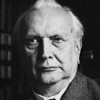
Karl Jaspers
Karl Theodor Jasperswas a German-Swiss psychiatrist and philosopher who had a strong influence on modern theology, psychiatry, and philosophy. After being trained in and practicing psychiatry, Jaspers turned to philosophical inquiry and attempted to discover an innovative philosophical system. He was often viewed as a major exponent of existentialism in Germany, though he did not accept this label...
NationalityGerman
ProfessionPsychologist
Date of Birth23 February 1883
CountryGermany
Everything depends therefore on encountering thought at its source. Such thought is the reality of man's being, which achieved consciousness and understanding of itself through it.
The history of philosophy is not, like the history of the sciences, to be studied with the intellect alone. That which is receptive in us and that which impinges upon us from history is the reality of man's being, unfolding itself in thought.
I discovered that the study of past philosophers is of little use unless our own reality enters into it. Our reality alone allows the thinker's questions to become comprehensible.
The moment is the sole reality.
As a universal history of philosophy, the history of philosophy must become one great unity.
Even scientific knowledge, if there is anything to it, is not a random observation of random objects; for the critical objectivity of significant knowledge is attained as a practice only philosophically in inner action.
If philosophy is practice, a demand to know the manner in which its history is to be studied is entailed: a theoretical attitude toward it becomes real only in the living appropriation of its contents from the texts.
An ideology is a complex of ideas or notions which represents itself to the thinker as an absolute truth for the interpretation of the world and his situation within it; it leads the thinker to accomplish an act of self-deception for the purpose of justification, obfuscation and evasion in some sense or other to his advantage.
All democracies demand common public education because nothing makes people so much alike as the same education.
Philosophy is tested and characterised by the way in which it appropriates its history.
Philosophy can only be approached with the most concrete comprehension.
When language is used without true significance, it loses its purpose as a means of communication and becomes an end in itself.
Greatness of mind becomes an object of love only when the power at work in it itself has a noble character
The Socratic teacher turns his students away from himself and back onto themselves; he hides in paradoxes, makes himself inaccessible. The intimate relationship between student and teacher here is not one of submission, but of a contest for truth.