Linus Pauling
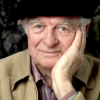
Linus Pauling
Linus Carl Pauling was an American chemist, biochemist, peace activist, author, and educator. He published more than 1,200 papers and books, of which about 850 dealt with scientific topics. New Scientist called him one of the 20 greatest scientists of all time, and as of 2000, he was rated the 16th most important scientist in history. Pauling was one of the founders of the fields of quantum chemistry and molecular biology...
NationalityAmerican
ProfessionScientist
Date of Birth28 February 1901
CityPortland, OR
CountryUnited States of America
Life is a relationship among molecules and not a property of any molecule.
You have to have a lot of ideas. First, if you want to make discoveries, it's a good thing to have good ideas. And second, you have to have a sort of sixth sense-the result of judgment and experience-which ideas are worth following up. I seem to have the first thing, a lot of ideas, and I also seem to have good judgment as to which are the bad ideas that I should just ignore, and the good ones, that I'd better follow up.
Only when I began studying chemical engineering at Oregon Agricultural College did I realize that I myself might discover something new about the nature of the world.
[David Harker asked: Dr Pauling, how do you have so many good ideas?] Well David, I have a lot of ideas and throw away the bad ones.
No evidence compels the conclusion that the minimum required intake of any vitamin comes close to the optimum intake that sustains good health.
Science is the search for truth.
There is no area of the world that should not be investigated by scientists. There will always remain some questions that have not been answered. In general, these are the questions that have not yet been posed.
[Instead of collecting stamps, he collected dictionaries and encyclopaedias:] Because you can learn more from them.
I try to identify myself with the atoms ... I ask what I would do If I were a carbon atom or a sodium atom.
If the structure that serves as a template (the gene or virus molecule) consists of, say, two parts, which are themselves complementary In structure, then each of these parts can serve as the mould for the production of a replica of the other part, and the complex of two complementary parts thus can serve as the mould for the production of duplicates of itself.
Like thousands of other boys, I had a little chemical laboratory in our cellar and think that some of our friends thought me a bit crazy.
There is no safe amount of radiation. Even small amounts do harm.
I believe that there is a greater power in the world than the evil power of military force, of nuclear bombs -- there is the power of good, of morality, of humanitarianism.
I like people. I like animals, too-whales and quail, dinosaurs and dodos. But I like human beings especially, and I am unhappy that the pool of human germ plasm, which determines the nature of the human race, is deteriorating.