Linus Pauling
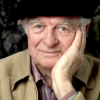
Linus Pauling
Linus Carl Pauling was an American chemist, biochemist, peace activist, author, and educator. He published more than 1,200 papers and books, of which about 850 dealt with scientific topics. New Scientist called him one of the 20 greatest scientists of all time, and as of 2000, he was rated the 16th most important scientist in history. Pauling was one of the founders of the fields of quantum chemistry and molecular biology...
NationalityAmerican
ProfessionScientist
Date of Birth28 February 1901
CityPortland, OR
CountryUnited States of America
I have been especially fortunate for about 50 years in having two memory banks available-whenever I can't remember something I ask my wife, and thus I am able to draw on this auxiliary memory bank. Moreover, there is a second way In which I get ideas ... I listen carefully to what my wife says, and in this way I often get a good idea. I recommend to ... young people ... that you make a permanent acquisition of an auxiliary memory bank that you can become familiar with and draw upon throughout your lives.
Provided one has the correct level of vitamin, mineral and nutritional input, the body can overcome disease.
Satisfaction of one's curiosity is one of the greatest sources of happiness in life.
Optimum nutrition is the medicine of tomorrow.
By the proper intakes of vitamins and other nutrients and by following a few other healthful practices from youth or middle age on, you can, I believe, extend your life and years of well-being by twenty-five or even thirty-five years.
Life ... is a relationship between molecules.
When an old and distinguished person speaks to you, listen to him carefully and with respect — but do not believe him. Never put your trust into anything but your own intellect. Your elder, no matter whether he has gray hair or has lost his hair, no matter whether he is a Nobel laureate — may be wrong. The world progresses, year by year, century by century, as the members of the younger generation find out what was wrong among the things that their elders said. So you must always be skeptical — always think for yourself.
You can trace every sickness, every disease and every ailment to a mineral deficiency.
Do not let either the medical authorities or the politicians mislead you. Find out what the facts are, and make your own decisions about how to live a happy life and how to work for a better world.
The best way to have a good idea is to have a lot of ideas.
I believe that you can, by taking some simple and inexpensive measures, extend your life and your years of well-being. My most important recommendation is that you take vitamins every day in optimun amounts, to supplement the vitamins you receive in your food.
I think that the formation of [DNA's] structure by Watson and Crick may turn out to be the greatest developments in the field of molecular genetics in recent years.
I believe that you can, by taking some simple and inexpensive measures, lead a longer life and extend your years of well-being. My most important recommendation is that you take vitamins every day in optimum amounts to supplement the vitamins that you receive in your food.
During the time that [Karl] Landsteiner gave me an education in the field of imununology, I discovered that he and I were thinking about the serologic problem in very different ways. He would ask, What do these experiments force us to believe about the nature of the world? I would ask, What is the most. simple and general picture of the world that we can formulate that is not ruled by these experiments? I realized that medical and biological investigators were not attacking their problems the same way that theoretical physicists do, the way I had been in the habit of doing.